
Last Updated: October 3, 2026
Luxury handcrafted leather oxford shoes are footwear built by skilled artisans who cut, shape, and stitch each pair by hand from premium hides, rather than running components through an assembly line. At Robert August, we build made-to-order pairs in Spain that combine traditional European handwork with modern digital design tools.
The difference shows up in three places: the leather, the construction, and the finish.
Mass-produced oxfords often use corrected-grain leather, a sanded and stamped hide that hides flaws but loses breathability. Handcrafted pairs typically start with full-grain calfskin, the top layer of the hide with the grain intact. It ages instead of cracking.
Then there is the construction itself. Most budget dress shoes are cemented, meaning the sole is glued to the upper. Glue fails. Stitching does not.
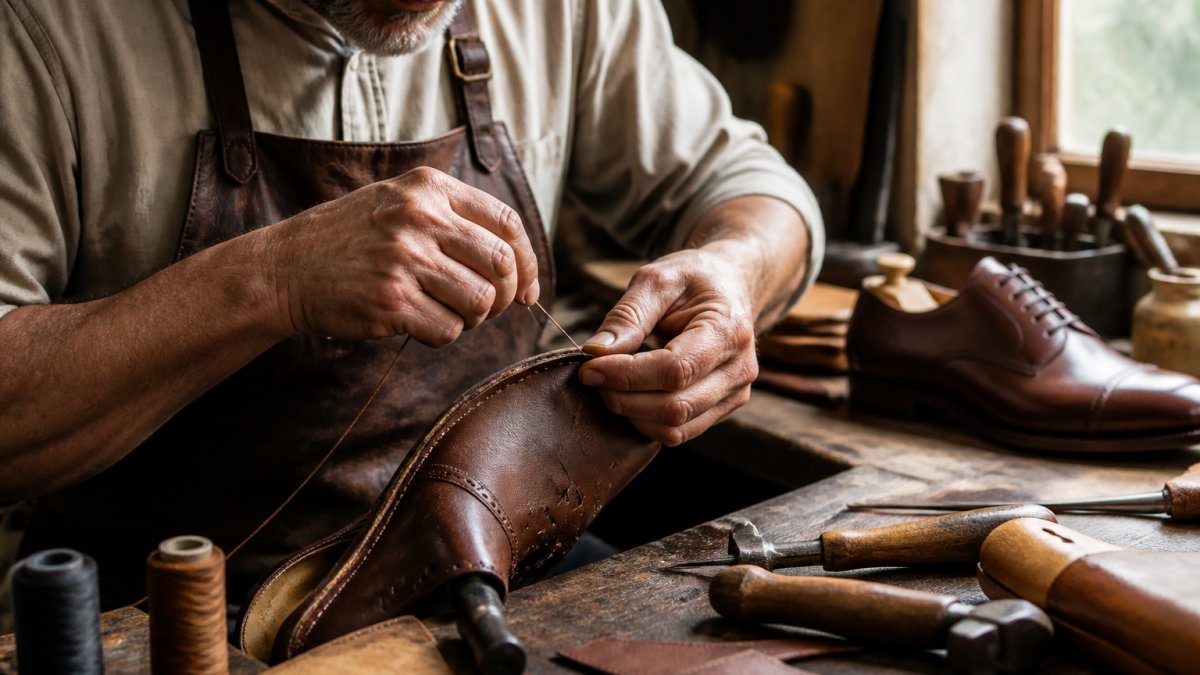
Goodyear-welted construction is a shoemaking method where the upper is stitched to a welt, which is then stitched to the sole, creating a durable, water-resistant bond that can be resoled repeatedly.
That matters more than most buyers realize. A Goodyear-welted shoe can be repaired for years rather than replaced. The welt, the stitched strip running around the shoe’s edge, is the part that makes resoling possible without damaging the upper.
Hand-stitched detailing around the welt and heel stack adds another layer of durability. It takes longer. It also outlasts machine work.
The benefits of full-grain leather shoes come down to three things: patina, breathability, and durability.
Patina is the rich, deepening sheen leather develops as it absorbs oils and reacts to light and wear. Cheap leather does not develop patina. It just gets scuffed.
Full-grain calfskin also breathes. Because the grain layer is intact, air moves through the material, which keeps feet cooler during long days. Corrected-grain and bonded leathers seal that surface, trapping heat.
Durability is where full-grain pulls ahead. The fibers in the grain layer are tightly packed, so the leather resists tearing and stretching. With basic care, a well-made full-grain shoe holds its shape for years.
A common mistake is treating a new pair like a beater pair. Rotate them, condition them, and they reward you. Skip that, and even premium upper leather dries out and cracks at the flex point.
Bespoke vs made-to-order shoes is the decision most buyers get wrong. Bespoke means a unique last is carved from your foot measurements, usually over multiple fittings. Made-to-order means you choose from existing designs and adjust fit, leather, and detailing to your specifications.
Bespoke takes longer and costs more. Made-to-order delivers most of the fit benefit in a fraction of the time.
For professionals who need shoes for work, not a six-month project, made-to-order is usually the smarter call. You get a custom fit without the wait.
This is where modern tools change the experience. Instead of mailing measurements to a workshop and hoping, you can design the shoe yourself online, choosing the last width, upper leather, lining, sole construction, and hand-dyed finish.
For anyone with wide feet or a size difference between feet, that flexibility matters.
Timelines vary by design and workshop load.
Closed-lacing is the defining feature of an oxford: the eyelet tabs are stitched under the vamp, so the shoe closes cleanly across the top. That is what separates it from a derby, which has open lacing.
The classic silhouette usually includes a toe cap, a reinforced panel across the front of the shoe that adds structure and protects the most exposed area.
Brogueing refers to the decorative perforations punched into the leather. A full brogue covers the toe cap and seams. A semi-brogue keeps it to the cap and heel. A quarter brogue is the most restrained, and the safest choice for formal attire.
| Feature | What It Does | Best For |
|---|---|---|
| Closed lacing | Clean, formal closure | Business and formal wear |
| Toe cap | Adds structure, protects the toe | Everyday wear |
| Quarter brogue | Subtle perforation detail | Conservative offices |
| Semi-brogue | Decorative cap and heel detail | Smart-casual settings |
| Full brogue | Heavy perforation across the shoe | Weekend and creative dress |
How to maintain handmade leather shoes comes down to a repeatable routine: clean, condition, protect, rest, and repair.
Start with shoe trees. Cedar is the standard because it absorbs moisture and holds shape.
Cleaning should happen before conditioning. Use a horsehair brush to remove dust and grit, then a damp cloth for stubborn dirt. Never soak the leather.
Conditioning replaces the oils that wear out through flexing and exposure.
Protecting means matching the product to the leather. Cream polish adds color and nourishment. Wax polish adds a hard shine and water resistance but can clog the grain if overused.
Rotation is the habit nobody talks about. Leather needs 24 hours to dry completely between wears.
New handcrafted oxfords are stiff because the leather is thick, the sole is rigid, and the upper has not yet molded to your foot. This is normal. The break-in period typically takes 2-4 weeks of regular wear, depending on the leather and your foot shape.
The goal is to let the leather stretch and soften gradually without damaging the structure. Here is a sequence that works:
A common mistake is using heat or water to speed up the process. Both damage the leather. Heat dries it out; water can cause the sole to swell and the welt to separate. Patience is the only shortcut.
Once broken in, handcrafted oxfords should feel like a second skin. If they still hurt after four weeks of regular wear, the fit is wrong, not the break-in process.
Repairability is the most underrated feature in footwear. A Goodyear-welted shoe can be resoled, and a well-maintained upper can be reconditioned and refinished. That turns a single purchase into a decade of wear.
This is the investment piece mindset: buy fewer, better pairs, and repair them instead of replacing them.
Resoling a Goodyear-welted shoe is a skilled job, but it is not complicated. The cobbler removes the worn outsole, stitches a new sole to the existing welt, and trims and finishes the edge.
A full resole should be done when the sole is worn through but before the welt is damaged. If you wait too long, the welt itself may need replacing, which is more expensive and time-consuming.
Finding a good cobbler matters more than finding a cheap one. Look for someone who specializes in welted footwear, not just general shoe repair. Ask if they hand-stitch the welt or use a machine. Ask to see examples of their work.
Find a reputable cobbler through the Shoe Service Institute of America
Made-to-order production reduces waste. Shoes are built after the order, not in bulk, so there is less unsold stock and less overproduction. That alone cuts the environmental footprint compared to mass-produced footwear.
Leather tanning is the most resource-intensive part of shoemaking. Vegetable-tanned leathers use natural tannins and produce less toxic runoff than chrome tanning, though they take longer to produce.
Dress codes have loosened, but oxfords still anchor a sharp outfit. The trick is matching the finish and detailing to the setting.
A dark, plain-toe oxford in black or deep brown reads formal. A hand-dyed brown pair with light brogueing reads smart-casual and works with tailored trousers and a knit polo.
For formal attire, choose black calfskin with closed-lacing and minimal brogueing. Pair with a dark suit.
For business casual, a brown or oxblood oxford with a semi-brogue works well with wool trousers and a blazer. Skip the full brogue unless the office is genuinely relaxed.
The hardest part of buying luxury handcrafted leather oxford shoes is trusting that the pair will fit and hold up, especially when you cannot try them on first.
Robert August builds made-to-order footwear handcrafted in Spain, with a digital design tool that lets you set the fit, leather, and finish yourself. Every pair ships worldwide with free shipping, and our team has been delivering custom-made shoes since 2016.
Get started with Robert August and design a pair built around your feet, not a standard size chart.
Luxury handcrafted leather oxford shoes combine full-grain calfskin, Goodyear-welted or hand-stitched sole construction, closed-lacing, and hand-finished details like brogueing and a sculpted toe cap. The leather is selected for tight grain and even colour, then shaped over a last by a master artisan. These choices affect how the shoe ages, breathes, and holds its silhouette. The result is a shoe that develops a patina over years rather than creasing into a disposable shape.
Bespoke vs made-to-order shoes differ mainly in how much of the pattern is built for you. Bespoke starts with a personal last carved from your measurements, so the fit is unique to your feet. Made-to-order uses an existing last but lets you choose leather, colour, sole, lining, and finishing details. Both deliver a custom fit and artisan-crafted quality. Made-to-order usually arrives faster, while bespoke offers the closest match for asymmetries or wide feet.
Caring for luxury leather oxford shoes starts with a cedar shoe tree inserted after every wear to absorb moisture and hold the shape. Brush off dust, then apply a leather conditioner every few weeks to keep full-grain calfskin supple. Rotate pairs so each has a day to dry. For scuffs, use a matching cream polish. Avoid direct heat. When the sole wears thin, a cobbler can resole a Goodyear-welted shoe, extending its life for years.
Handcrafted shoes are worth the investment when you factor in repairability and longevity. A Goodyear-welted sole can be replaced multiple times, so the upper leather outlasts several pairs of cemented shoes. Full-grain calfskin develops a patina that improves with age. For professionals wearing oxfords several days a week, the cost per wear drops well below that of mass-produced alternatives. The main trade-offs are a break-in period.



Explore luxury handcrafted leather oxford shoes, from full-grain leather benefits to bespoke vs made-to-order and maintenance tips.
Don’t let your shoes be an afterthought in your business casual wardrobe. The right pair can elevate your entire look, while the wrong choice can
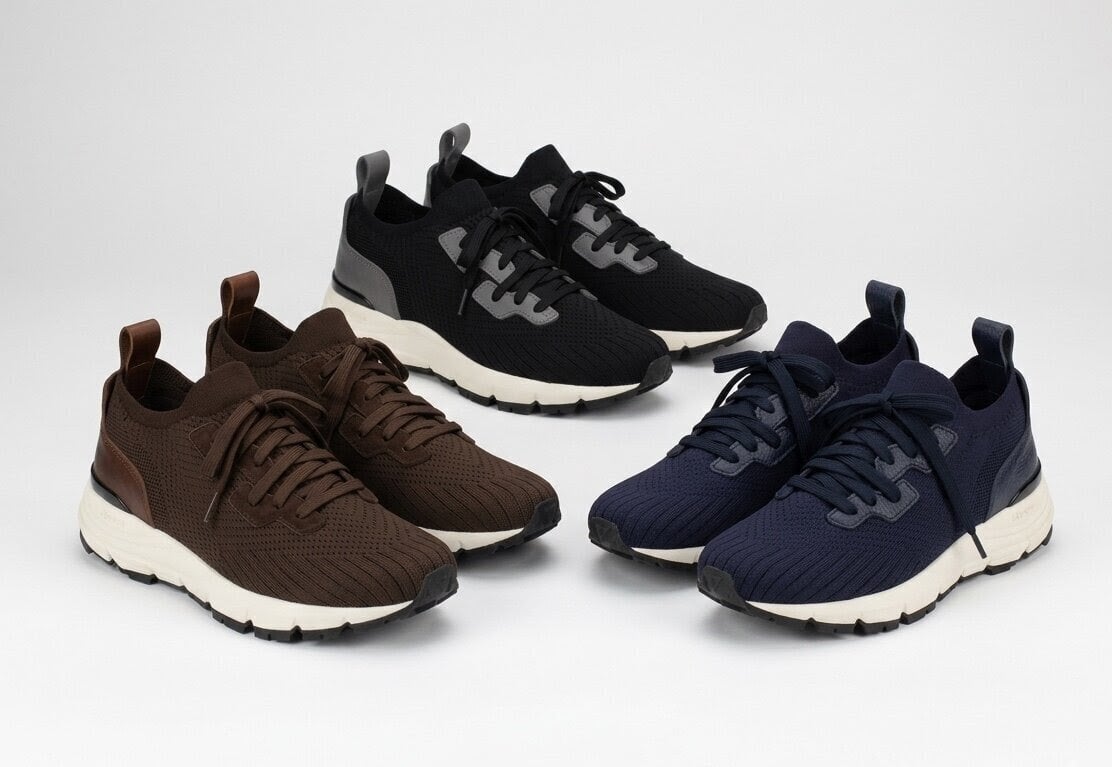
Robert August, a renowned name in handcrafted footwear, is proud to announce the latest addition to its esteemed casual sneaker collection: The Berwyn Ave. Knit
Chicago, IL – May 8, 2025 — Robert August, renowned for its devotion to timeless craftsmanship and bespoke footwear, proudly announces the release of The State St.