

Last Updated: October 11, 2026
The global leather footwear market reached $162.1 billion in 2025 and is projected to grow to $168.4 billion in 2026, according to Grand View Research’s Leather Footwear Market Report. Yet within this massive industry, a clear divide exists between handmade leather shoes and mass-produced footwear. At Robert August, we analyze what separates truly crafted footwear from factory-made alternatives. The difference isn’t just price, it’s durability, fit, and how a shoe evolves on your foot over time.
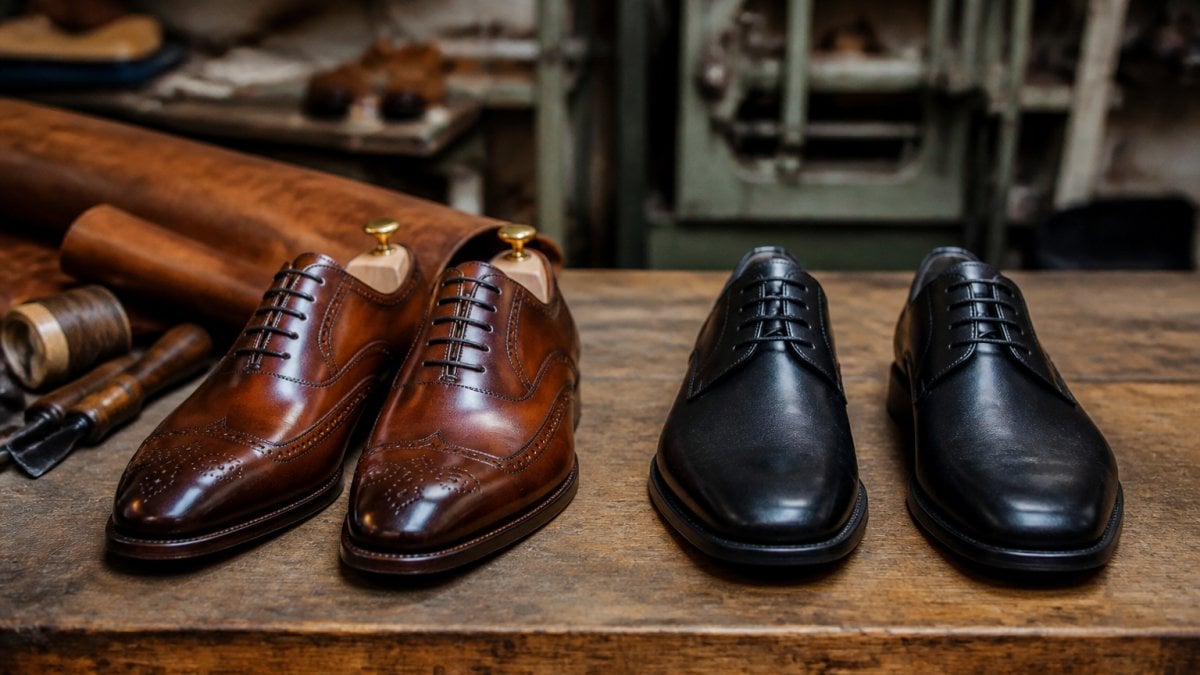
Handmade leather shoes are built by skilled artisans using traditional construction methods, often taking weeks to complete a single pair. Mass-produced shoes roll off assembly lines in hours, optimized for consistency and cost. But here’s what most comparisons get wrong: mass-produced doesn’t automatically mean poor quality. Some factory shoes perform excellently. The real question is whether you’re paying for craftsmanship you’ll feel for years, or convenience you’ll replace in months.
This guide breaks down the practical distinctions across construction, materials, durability, fit, and cost, so you can decide which approach matches your needs and budget.
Handmade leather shoes begin with a shoe last, a wooden form shaped to specific proportions. An artisan stretches leather over this last by hand, making micro-adjustments for grain direction, tension, and symmetry.
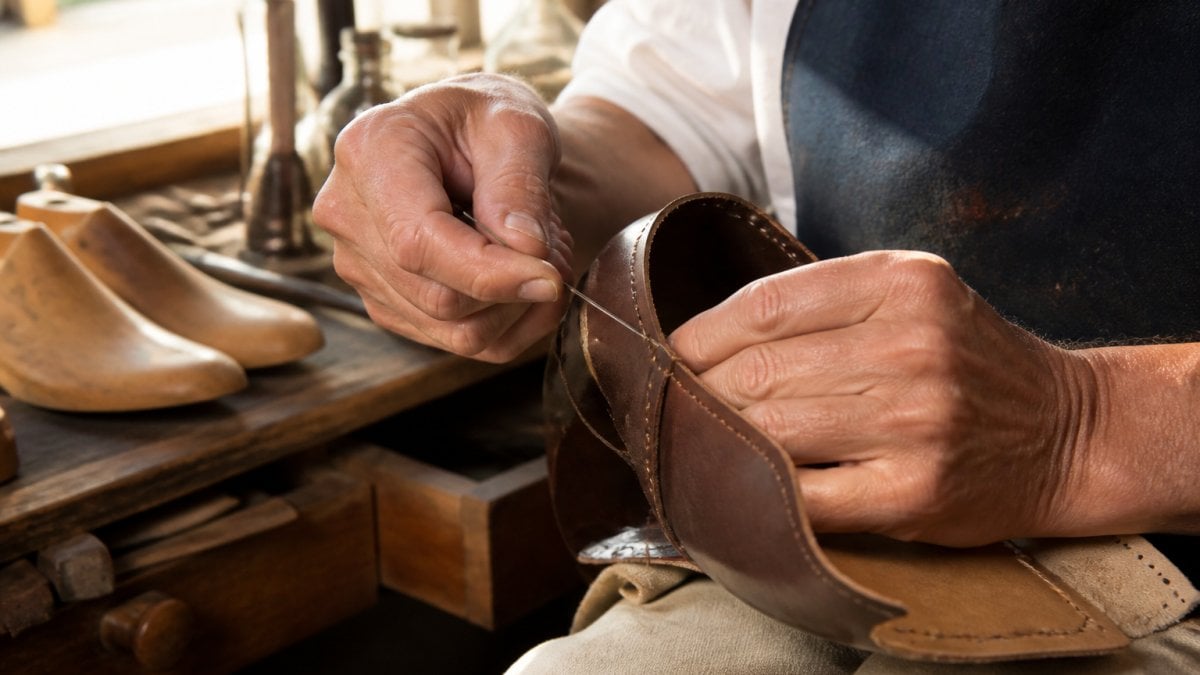
Goodyear welt construction, the gold standard in handmade footwear, attaches the sole through a strip of leather that runs around the shoe’s perimeter.
Blake stitch construction, used in some handmade shoes, skips the welt and stitches the sole directly to the upper. This produces a slimmer profile and lighter weight.
The result: each pair carries the maker’s hand. Variations in tone, subtle asymmetries, and unique patinas develop as the leather ages. This isn’t a flaw, it’s evidence of real craft.
Mass-produced shoes use the same construction methods, Goodyear welt, Blake stitch, or simpler glued construction, but apply them at industrial scale. Machines perform repetitive tasks: stretching leather, stitching uppers, attaching soles. Humans oversee quality checkpoints.
The advantage: consistency. Every shoe meets the same specifications. Sizing is predictable. Defect rates are measurable and low. A factory producing 10,000 pairs per month can afford precision machinery that individual makers cannot.
The disadvantage: efficiency often trumps nuance. Leather is selected for uniformity, not character. Finishes are applied by spray, not hand. The shoe arrives “perfect” but generic, it won’t develop a unique patina because the starting point was engineered for sameness.
Full-grain leather preserves the hide’s natural surface, including grain patterns and minor marks. This leather ages beautifully, it develops a patina and darkens over time. Full-grain is stronger than split leather and more breathable than synthetic alternatives.
Handmade shoemakers often source full-grain leather from tanneries with long histories, like those in Italy or Spain. They select hides individually, looking for grain character and natural variation.
Mass producers also use full-grain leather, but they source in bulk. They prioritize consistency, all hides should match in thickness, color, and grain. This means rejecting hides with character, which increases waste but reduces unpredictability.
The practical difference: handmade shoes made from artisanal leather will show more visual variation between pairs. One shoe might have a tighter grain, another a looser one. Mass-produced full-grain shoes look identical out of the box.
A well-made leather shoe can last 12 to 24 months of regular wear before the sole wears thin. This assumes daily use, normal conditions, and basic maintenance.
Handmade shoes built with Goodyear welt construction often outlast their soles by years. The upper, the leather part, remains sound long after the sole needs replacing. A cobbler can resole the shoe for $100-200, extending its life another 2-3 years.
Mass-produced shoes sometimes use glued construction, where the sole is bonded to the upper with adhesive. When the sole wears, the glue fails, and the shoe is often discarded.
The real durability advantage of handmade shoes isn’t just the construction, it’s the leather quality and the care taken in assembly. A handmade shoe made from thick, full-grain leather will simply outlast a mass-produced shoe made from thinner leather, regardless of construction method.
Handmade shoes are built for repair. The welt or Blake stitch is designed to be cut and re-stitched. A cobbler can resole a handmade shoe and return it looking nearly original. This extends the shoe’s life significantly and makes it economical to maintain a pair for years.
Mass-produced shoes vary. Premium mass-produced shoes using Goodyear welt can be resoled just as easily. Budget mass-produced shoes using glued construction cannot be effectively resoled, the upper won’t hold a new sole.
The calculation matters: if a handmade shoe costs $400 and a mass-produced shoe costs $150, but the handmade shoe can be resoled twice and the mass-produced shoe cannot, the handmade shoe costs $400 total over 6-8 years. The mass-produced shoe costs $450 (three pairs at $150 each). Handmade wins on lifecycle cost.
Handmade shoes are typically built on a specific shoe last, a wooden form that defines the shoe’s shape. A maker might offer 3-5 different lasts, each suited to different foot shapes.
This is more flexible than factory standards but less flexible than full custom.
The Cicero Ave. Single Monk No. 5744EX →
Mass-produced shoes come in standard sizes and widths. A size 10D is the same across all pairs. This works well for feet that match the standard proportions.
Robert August offers a different approach: digital customization combined with handmade production. You design your shoe using a 3D tool. The design is then handcrafted in Spain, giving you fit tailored to your foot.
Break-in period differs too. Mass-produced shoes are designed to be comfortable immediately, the leather is often pre-softened or treated to reduce stiffness.
Handmade leather shoes benefit from regular conditioning to maintain suppleness and prevent cracking. A quality leather conditioner, applied every 6-12 months, keeps the hide flexible and deepens its patina.
Mass-produced shoes made from thinner leather need less intensive care but still benefit from conditioning, especially if exposed to dry conditions or salt.
Key maintenance practices apply to both:
The difference: handmade shoes made from quality full-grain leather actually improve with proper care. The patina deepens, the leather softens, and the shoe becomes more comfortable. Mass-produced shoes maintain their condition but rarely improve, they’re designed to arrive finished.
Handmade leather shoes typically cost $300-600 per pair. This reflects labor, material sourcing, and small-batch production.
Mass-produced leather shoes range from $100-400, depending on brand and quality tier. A factory producing 100,000 pairs per year spreads fixed costs across millions of dollars of revenue, lowering per-unit cost.
At first glance, mass-produced wins on price. But lifecycle cost tells a different story.
| Scenario | Handmade | Mass-Produced |
|---|---|---|
| Initial cost | $400 | $150 |
| Lifespan (years) | 6-8 | 2-3 |
| Resole cost | $150 (2x) | Not viable |
| Total cost | $700 | $450 |
| Cost per year | $88-117 | $150-225 |
Handmade shoes cost less per year of wear, but require patience, you’re paying upfront for years of use.
Mass-produced shoes are cheaper to buy but more expensive to maintain over time because you replace them more often.
The real question: do you keep shoes long enough to recoup the handmade premium? If you wear business shoes daily and keep them for 5+ years, handmade is economical.
Choose handmade leather shoes if:
Choose mass-produced leather shoes if:
The best choice depends on how you use shoes, not on ideology. A professional who wears the same pair of oxfords four days a week will get more value from handmade. Someone who owns ten pairs of shoes and rotates them weekly will get more from mass-produced.
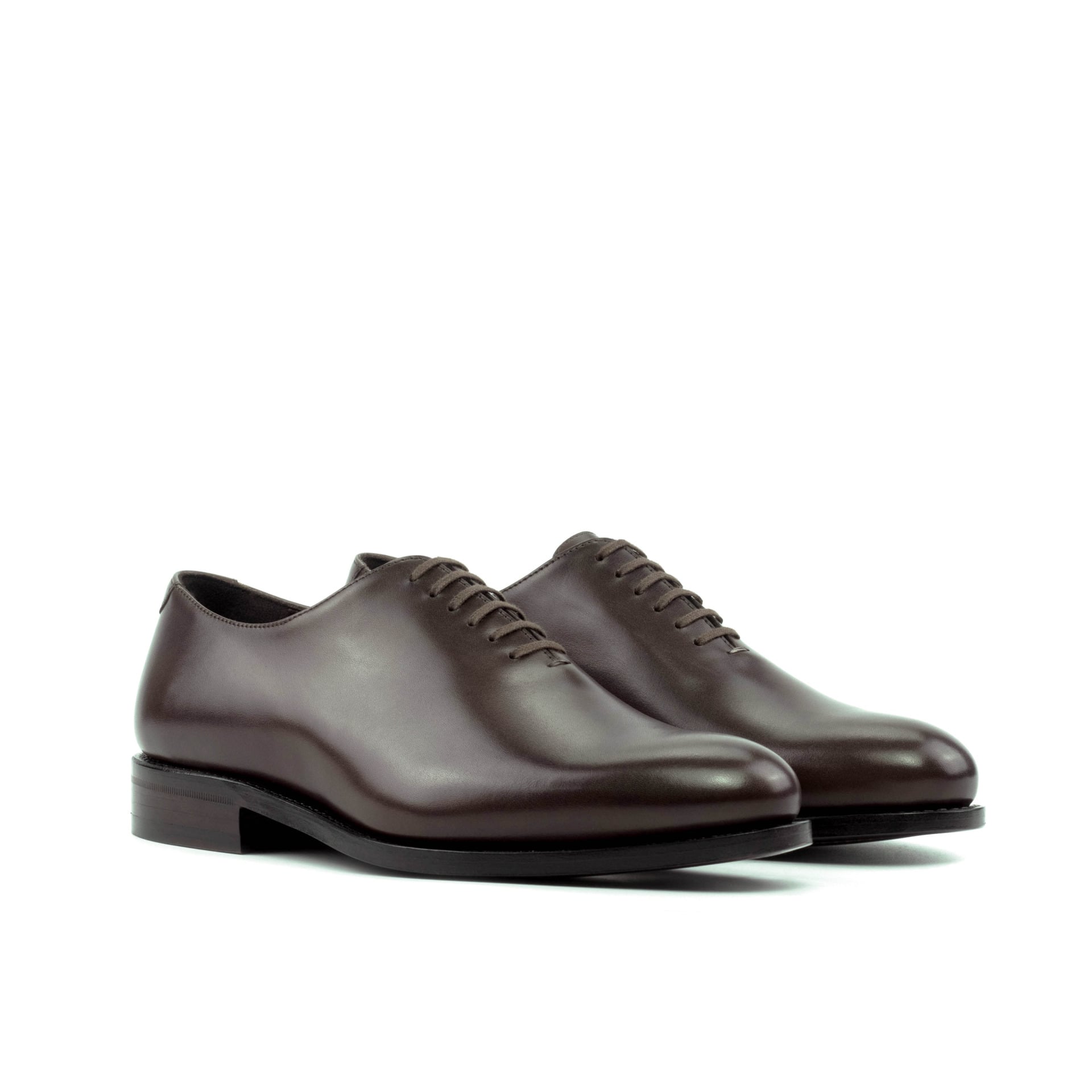
Robert August handmade shoes, like the Wabash Ave. Wholecut Oxford or Cicero Ave. Single Monk, bridge the gap. Each pair is handcrafted in Spain using Goodyear welt or Blake stitch construction, full-grain Italian calf leather, and customizable design. You get the durability and character of handmade footwear.
The choice between handmade and mass-produced leather shoes isn’t about which is objectively superior, it’s about matching construction and materials to how you actually wear shoes. If you invest in handmade footwear, you’re buying durability, personalization, and a shoe that improves with age.
Handmade leather shoes command higher upfront costs, typically $379-$489 for quality pairs, but deliver measurable value through durability and fit. Handcrafted construction using methods like Goodyear welt or Blake stitch allows resoling, extending lifespan to 12-24 months or longer with proper care. Mass-produced alternatives cost less initially but often require replacement within 12 months. The lifecycle cost favors handmade shoes when worn regularly, especially if you prioritize fit customization and repairability over affordability.
Handmade shoes are individually constructed by skilled artisans using traditional techniques like Goodyear welt or Blake stitch, allowing the sole to attach via a leather welt or stitching that permits resoling. Each pair molds to your foot over time and carries unique variations in finish. Machine-made shoes use factory production with glued soles and standardized sizing, delivering consistency and lower cost but limited repairability. Handmade construction takes weeks; mass-produced shoes are completed in days.
Handmade leather shoes with Goodyear welt or Blake stitch construction can last 12-24 months or longer with regular wear and proper care. The construction method allows cobblers to replace worn soles without disturbing the upper, extending life significantly beyond the initial sole. Mass-produced glued-sole shoes typically last 12 months before deterioration. Lifespan depends on wear frequency, leather grade, and maintenance. Full-grain leather shoes age better than bonded leather, developing character while resisting cracking. Regular conditioning, prompt repair of small damage, and rotating between pairs all extend functional life.
Luxury handmade leather shoes benefit from consistent care: brush off dirt after each wear, condition the leather every 3-6 months with quality cream or oil, and address scuffs promptly with appropriate repair products. Use cedar shoe trees to absorb moisture and maintain shape between wears. Rotate shoes to allow leather to dry fully and prevent premature wear. For hand-painted leather soles, avoid excess water exposure. Professional cobbler services (resoling, stitching repair) are cost-effective maintenance for construction methods like Goodyear welt. This care routine preserves patina development and extends lifespan significantly.
Handmade shoes can offer superior fit. However, fit depends on the shoemaker’s skill and your clear communication of fit requirements. Mass-produced shoes use standardized lasts and sizing, limiting accommodation for unusual foot shapes. The break-in period differs too: handmade shoes mold to your foot over time, while mass-produced shoes may never fully adapt. Custom fit is a key advantage of handcrafted construction, particularly for those with non-standard sizing.

Handmade leather shoes offer superior craftsmanship and durability, but mass-produced options provide consistency and value.
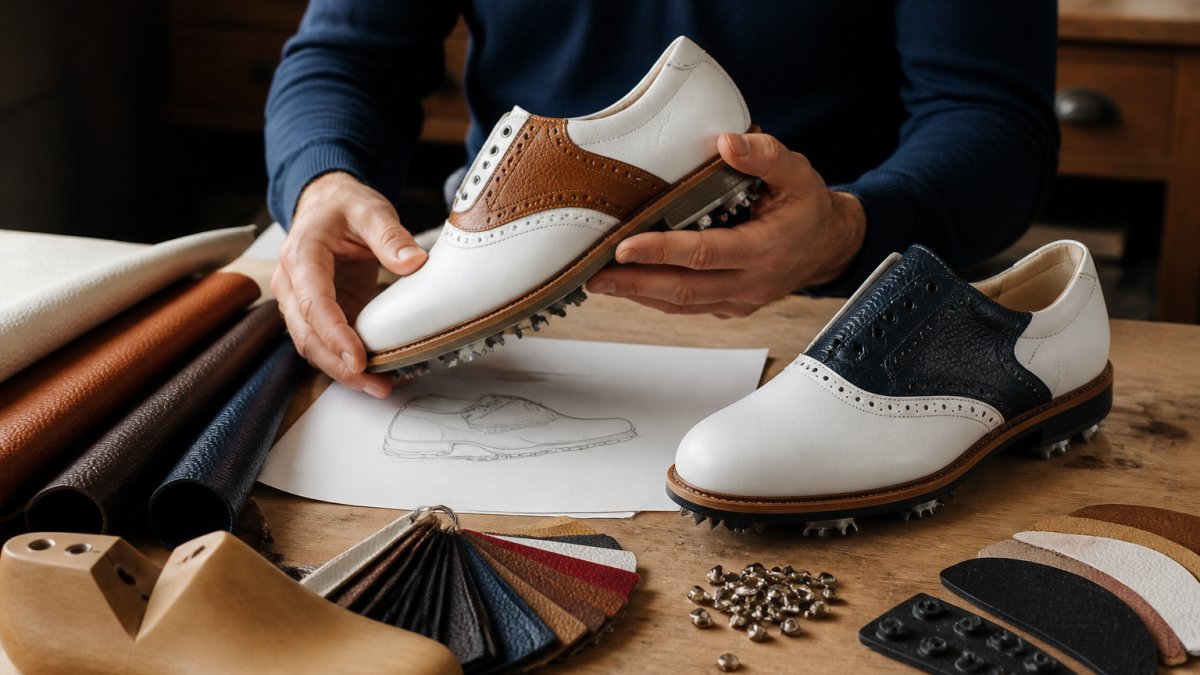
Discover the best custom golf shoes for men in 2026. Compare designs, fit, materials, and pricing to find your perfect pair.
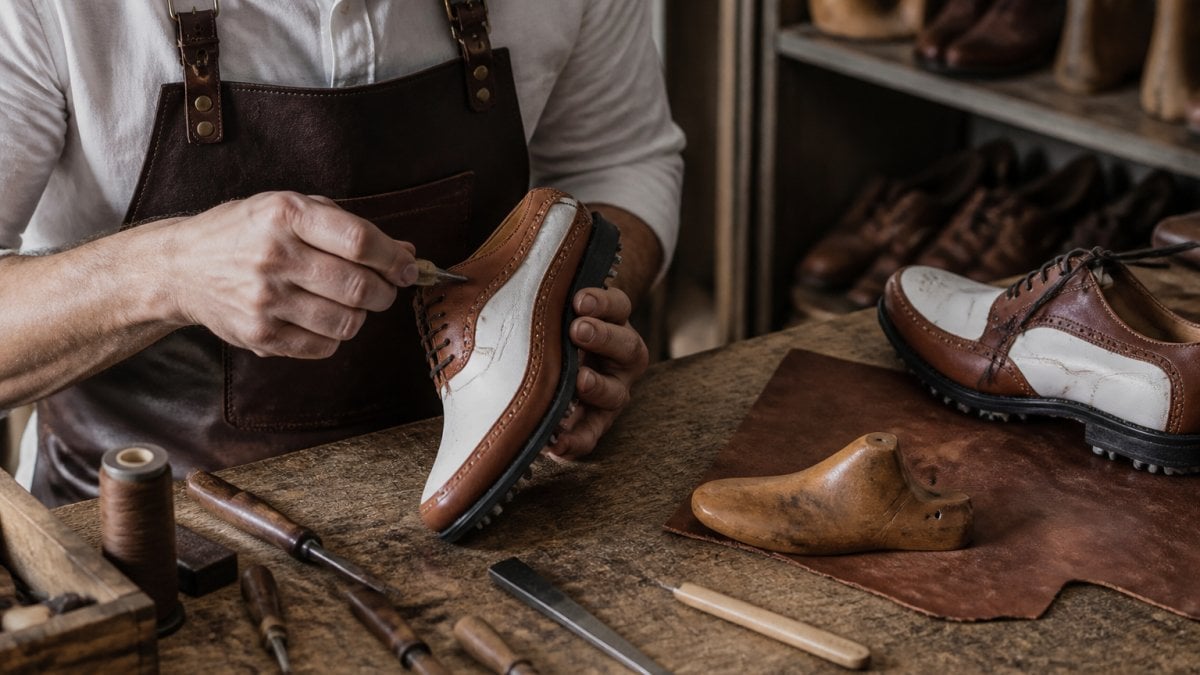
Discover why handmade leather golf shoes deliver superior comfort, durability, and performance. Learn how craftsmanship impacts your game and longevity.
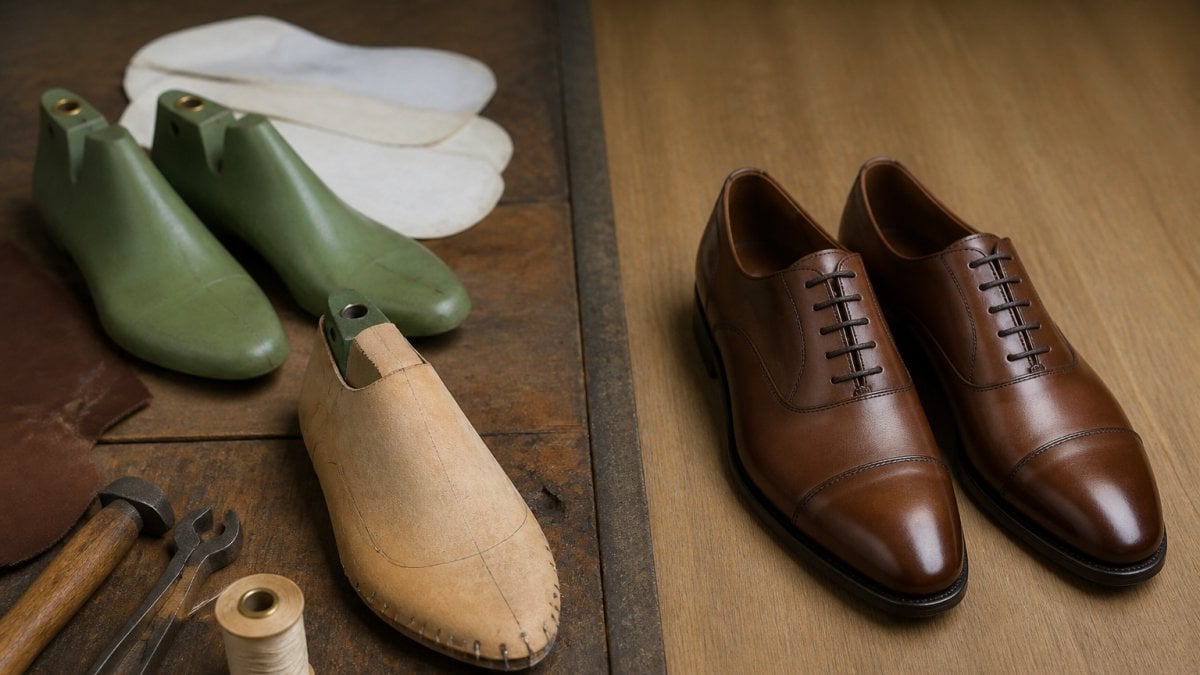
Bespoke vs ready to wear shoes compared: cost, fit, craftsmanship, and lead times. Discover which option suits your needs and budget.