
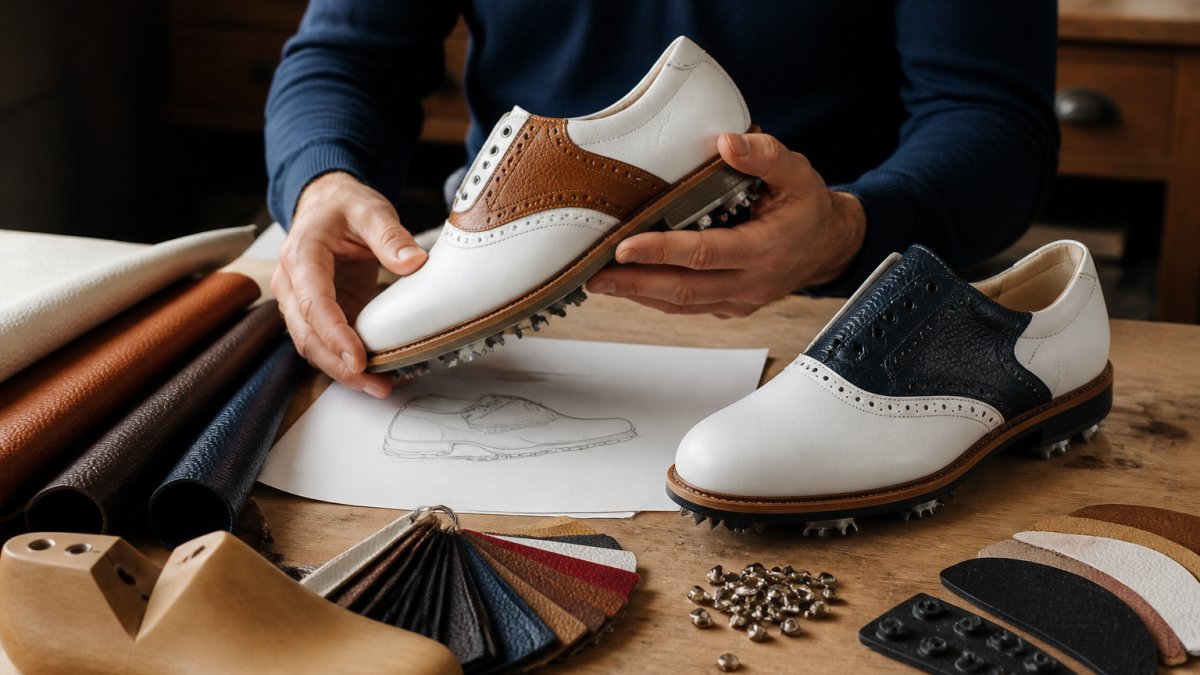

Last Updated: October 9, 2026
The best custom golf shoes for men solve a problem mass-produced footwear cannot: they match your foot, your swing, and your style at once.
That compromise has a measurable cost. Research on golf shoe outer sole design from the National Center for Biotechnology Information shows that sole and spike configuration directly affects the kinetics of a golf swing, which means your footwear is not a passive accessory.
Custom shoes also address fit problems off-the-shelf pairs ignore. Most men have one foot slightly larger than the other, and standard width runs rarely accommodate a wide forefoot with a narrow heel.
Below, we break down how to fit custom golf shoes properly, which design options matter, and how spiked versus spikeless soles change your game.
Every Robert August golf shoe is handcrafted to order in Spain and priced at $379, with customization available on materials, colors, and finishes.
| Model | Upper Materials | Signature Detail | Best For |
|---|---|---|---|
| Devon Ave. Full Brogue No. 8375 | Red patent leather, white luxe calf, navy calf quarter | Bold wingtip on a 312 rounded last | Golfers who want color on the course |
| Damen Ave. Double Monk No. 8373 | Black luxe calf, navy croco embossed calf | Squared nickel buckles, monk strap | Clubhouse-to-course wear |
| Cicero Ave. Single Monk No. 8350 | Porcelain white full grain, ivory kid suede vamp | Copper buckle, strapless lacing alternative | Hot rounds where breathability matters |
| Lincoln Ave. Saddle Shoe No. 8348 | Black luxe calf, red pebble grain saddle | Saddle construction for midfoot stability | Golfers who want lateral support |
| Belmont Ave. Oxford No. 8324 | Dark brown pebble grain, box calf | Closed lacing, dress-shoe profile | Business-casual dress codes |
What works: Softspikes® cleats appear across the range, and every model can be adjusted in color and leather before production.
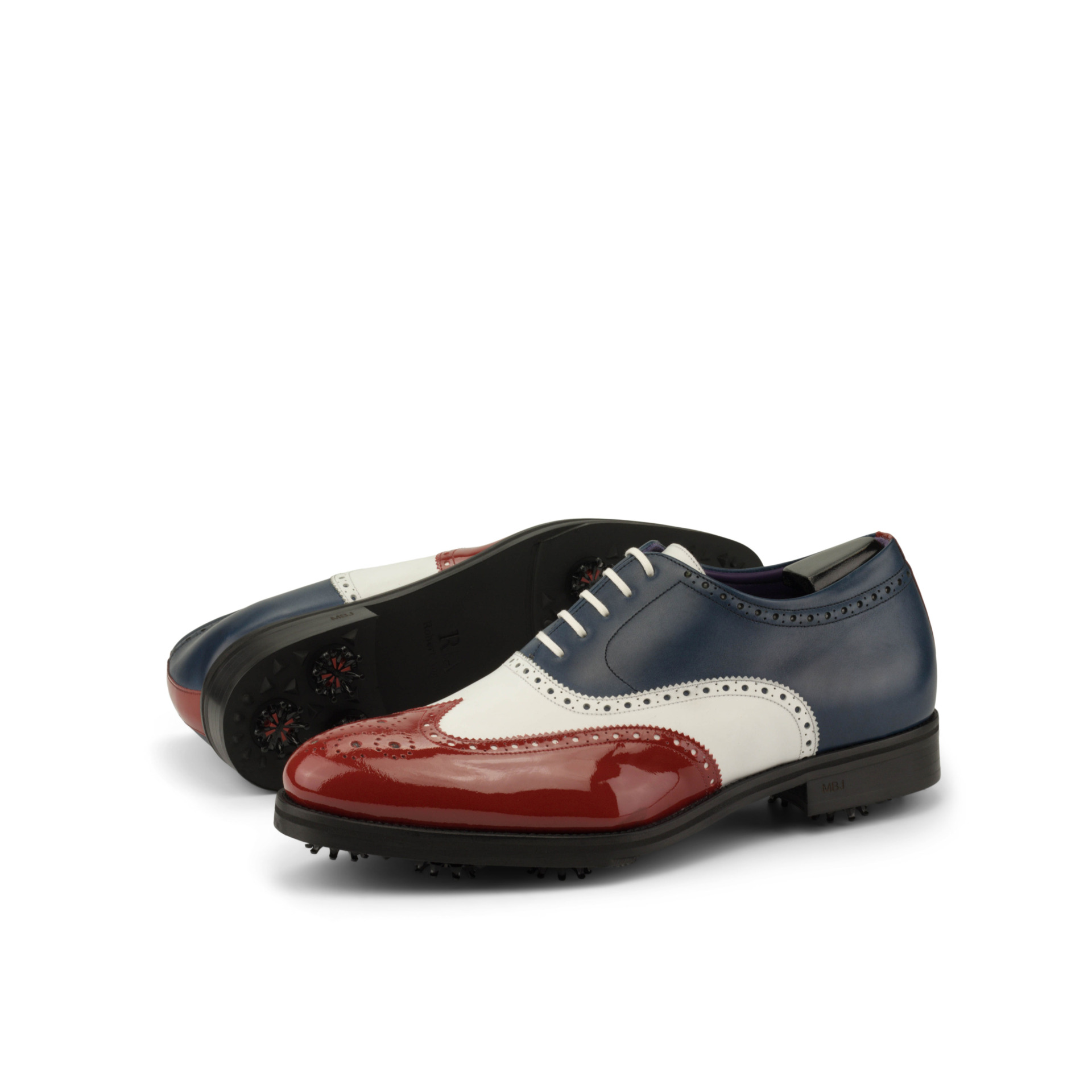

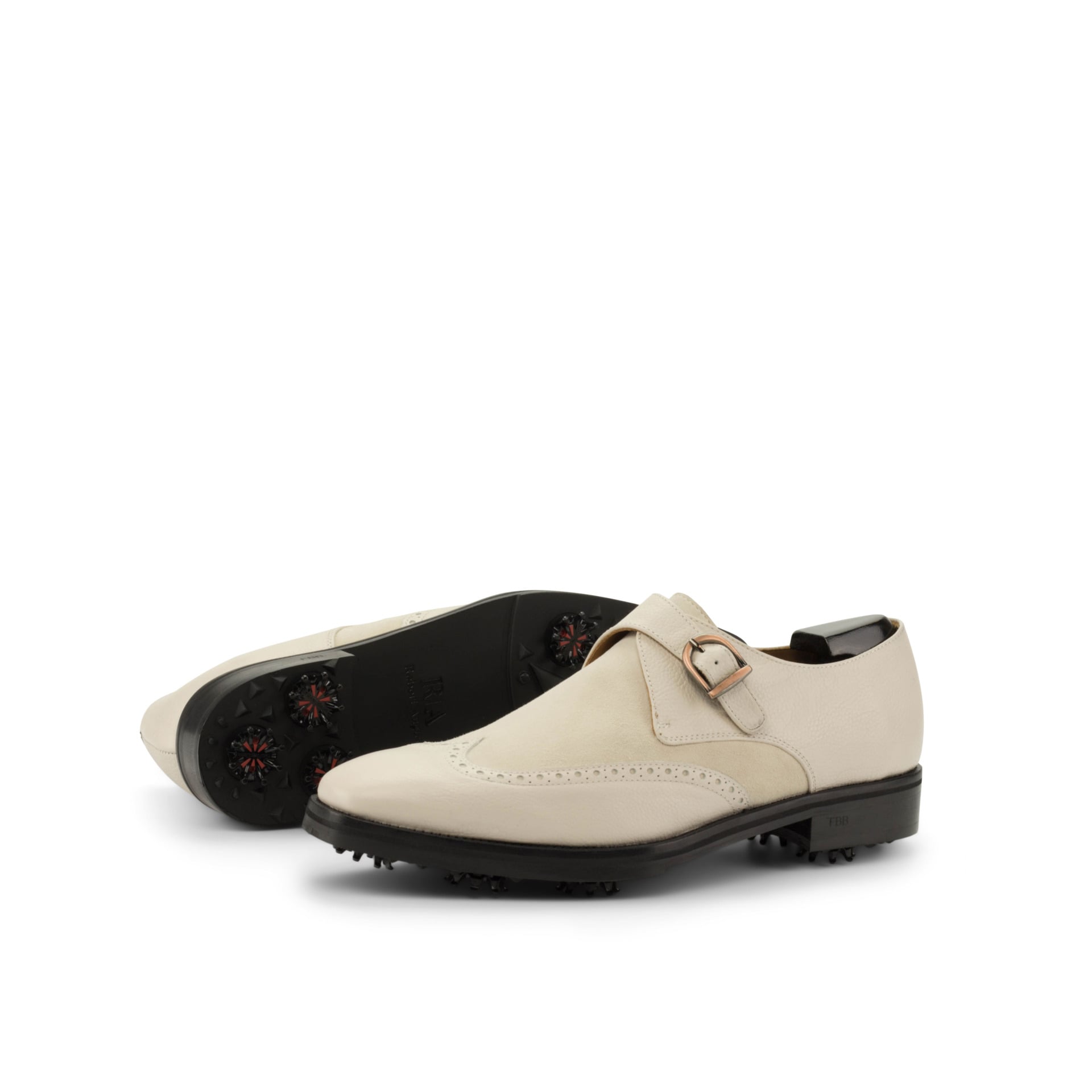
What doesn’t: At $379 a pair, these sit well above department-store pricing. That premium buys Spanish handcrafting and full customization, not volume.
Fitting custom golf shoes properly means measuring both feet, not just the longer one. Width, arch length, and heel volume all change how a shoe performs through eighteen holes.
Trace each foot on paper while standing, then measure the widest point across the ball and the distance from heel to the ball joint. Those two numbers matter more than overall length.
Because leather molds to your foot over time, a made-to-order shoe should feel snug at the ball without pinching the toes. Order one that already feels loose and the leather has nowhere to break in.
Asymmetry is normal. Most men have a dominant foot that runs longer or wider, and standard sizing forces you to buy for the larger foot and live with a loose shoe on the other.
Made-to-order footwear lets you specify each foot separately: a wider forefoot on one side, a narrower heel on the other, no compromise on either.
Custom golf shoe design options cover three decisions: upper leather, color blocking, and hardware. Get those right and the shoe looks intentional rather than decorated, but the depth of customization goes beyond a leather swatch to structural choices, personalization, and what each upgrade costs in time and money.
When you configure a made-to-order golf shoe, you are typically choosing from these categories:
Pricing varies widely. Entry-level made-to-order programs (like FootJoy MyJoys) start around $200-$250 and add $20-$50 for premium leathers or monograms. Bespoke handmade shoes from Spanish or English workshops start at $350-$500 and can exceed $1,000 with exotic skins.
Production time matters too. MyJoys ships in 2-3 weeks; handmade Spanish shoes often take 4-6 weeks because each pair is cut, stitched, and lasted individually. For a specific tournament, order at least two months ahead.
Full grain leather is the strongest part of the hide and resists moisture well, suiting the high-wear zones of a golf shoe.
Box calf has a fine grain and takes a high polish, which is why dress-focused models use it on the vamp.
Suede adds texture and depth. Waxed suede holds up better against dew than untreated, making it a reasonable choice for the saddle or heel.
Most competitors list customization options without comparing them side-by-side. Here is how three common approaches differ:
| Feature | Robert August (Made-to-Order) | FootJoy MyJoys (Configurable) | Hand-Painted Services (e.g., Stadium Custom Kicks) |
|---|---|---|---|
| Base price | $379 | ~$200-$250 | Varies; often $150-$300 + shoe cost |
| Customization scope | Full leather, color, hardware, lining | Limited to select models, colors, monograms | Aesthetic only (paint on existing shoe) |
| Production time | 4-6 weeks | 2-3 weeks | 1-2 weeks after shoe is sourced |
| Return policy | Limited; custom orders often final sale | Limited; custom orders often final sale | Typically no returns on painted shoes |
| Best for | Golfers wanting a fully bespoke fit and design | Golfers wanting quick personalization on a known fit | Golfers wanting one-of-a-kind art on a favorite pair |
The trade-off: true made-to-order shoes offer deep customization but demand patience and a higher budget. Configurable programs are faster and cheaper but restrict choices. Hand-painted services are purely cosmetic and do not improve fit or performance.
FootJoy’s MyJoys customization platform lets players adjust fit, materials, and aesthetics, which shows how mainstream personalization has become. Specialized services such as Stadium Custom Kicks hand-painted golf footwear have pushed aesthetics even further.
Spiked golf shoes use replaceable cleats that bite into turf for maximum grip. Spikeless shoes use molded rubber lugs that trade traction for versatility off the course.
The Devon Ave. Full Brogue No. 8375 | Golf Shoes →
The choice depends on how you play. Walking a hilly course in wet conditions, spiked soles keep your stance stable through the swing. Driving a cart on firm, dry fairways and wanting one pair for commute and round, spikeless works fine.
Every Robert August golf shoe uses Softspikes® cleats.
Made-to-order golf shoes follow a fixed sequence: you configure the design, the workshop builds the pair, and it ships to your door, no warehouse stock, no guesswork about sizes.
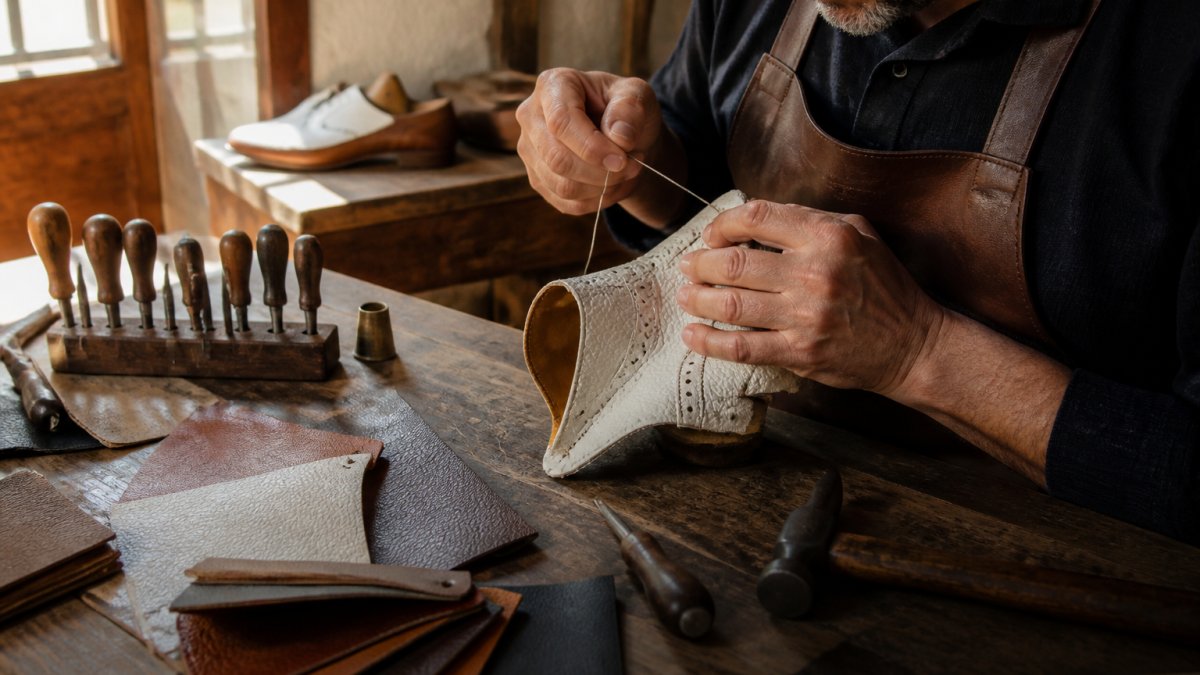
The process typically runs in four stages:
If you have never bought made-to-order footwear, the honest caveat is time. Production is not instant, and a custom pair will not arrive in the same week as a warehouse order.
Durability in a leather golf shoe comes down to three habits: cleaning after wet rounds, conditioning the leather, and replacing cleats before they wear smooth. Tailor your care routine to the materials you chose.
Hand-painted or patina finishes: Applied over a base leather and sealed with a protective topcoat.
Exotic leathers (crocodile, ostrich, lizard): More delicate than calf, they dry out faster and can crack without regular conditioning.
Suede and nubuck: Brush with a suede brush after each wear to lift dirt; for deeper cleaning, use a foam cleaner designed for suede.
Full grain and box calf: The most forgiving.
Custom shoes are an investment, and many makers offer repair services. Before ordering, check:
Handmade shoes with replaceable soles and stitched construction can be repaired multiple times, while cemented (glued) soles on mass-produced shoes are often not worth repairing, a key hidden value of custom footwear.
Store the pair with shoe trees to hold the upper’s shape and stop the vamp creasing in the same place every round. For exotic leathers, use cedar (not plastic) to absorb moisture. Rotate shoes, giving them 24 hours to dry between rounds. After 18 holes in the rain, stuff them with newspaper, then air-dry away from direct heat. Maintaining this level of care for your footwear ensures that your gear remains as reliable as the moisture wicking shirts you rely on to stay comfortable through the back nine.
Most competitors do not compare how custom shoes hold up versus mass-produced ones. Based on common wear patterns:
Understanding these timelines lets you budget for maintenance and decide whether a custom pair is worth the premium for your playing frequency.
The gap between a $379 made-to-order pair and a mass-produced shoe is not just aesthetics. It is fit that accounts for both feet, materials that mold to your stride, and a design you chose rather than settled for.
If you want footwear that performs on the fairway and looks correct in the clubhouse, that combination is hard to find off the shelf.
The best custom golf shoes for men depend on your priorities. For a blend of traditional shoemaking and on-course performance, Robert August offers handcrafted, made-to-order designs starting at $379. Their range includes full brogues, monk straps, saddle shoes, and oxfords, all equipped with Softspikes® cleats. Consider your typical course conditions, walking frequency, and style preferences before deciding.
Yes. Robert August allows you to adjust materials, colors, and hardware on every pair. For fit, the made-to-order process accommodates wide feet and asymmetries that standard sizing cannot. You select the leathers, lining, and buckle finishes, then the artisans in Spain build the shoe to your specifications. This level of personalization is why many golfers choose custom over mass-produced options.
Custom golf shoes cost more than off-the-shelf pairs, but they address fit issues that generic sizing ignores. Robert August shoes start at $379 and are handcrafted in Spain with premium leathers. If you play regularly, walk the course, and want footwear that lasts multiple seasons, the investment can be justified. The key is whether the fit and materials solve problems you have with standard shoes.
Custom golf shoes should fit snugly around the heel and midfoot with about a thumb’s width of space at the toe. When you walk, your heel should not slip. The leather will mold to your foot over time, so initial tightness in the vamp is normal. If you have asymmetrical feet, the made-to-order process lets you specify different measurements for each foot.
Spiked shoes like the Robert August models with Softspikes® cleats provide maximum traction on wet or uneven terrain. Spikeless shoes offer convenience and can be worn off the course, but they sacrifice grip in poor conditions. If you play early morning rounds or on hilly courses, spiked shoes are the safer choice. For dry, flat courses and clubhouse transitions, spikeless works fine.
Most golfers accept a compromise between a shoe that fits, a shoe that performs, and a shoe that looks right. Robert August removes that trade-off with made-to-order golf shoes handcrafted in Spain, fully customizable in leather, color, and hardware, and equipped with Softspikes® cleats for genuine on-course grip. Browse our collection and build a pair that matches your foot and your game.

Discover the best custom golf shoes for men in 2026. Compare designs, fit, materials, and pricing to find your perfect pair.
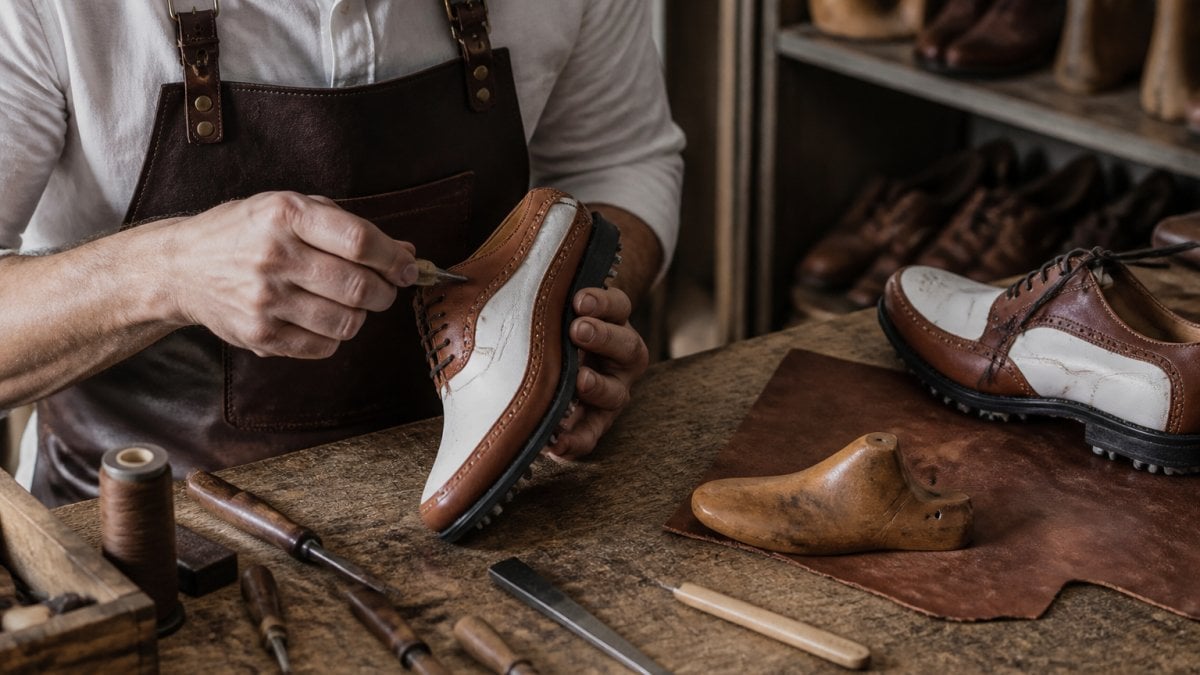
Discover why handmade leather golf shoes deliver superior comfort, durability, and performance. Learn how craftsmanship impacts your game and longevity.
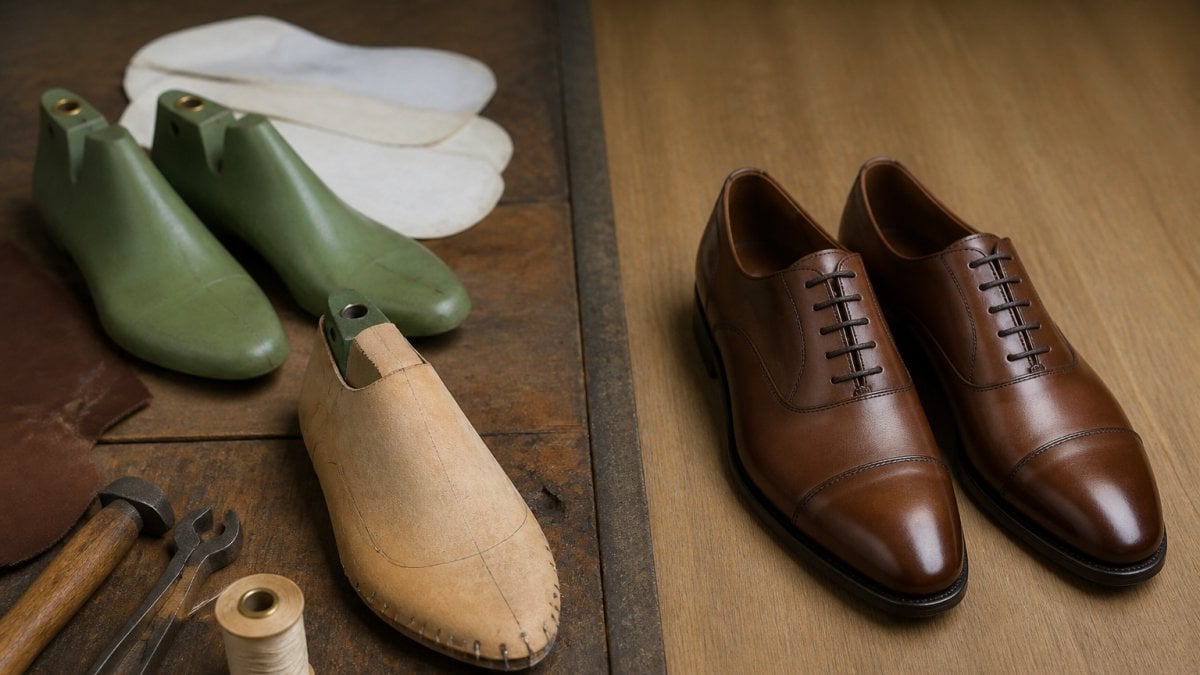
Bespoke vs ready to wear shoes compared: cost, fit, craftsmanship, and lead times. Discover which option suits your needs and budget.
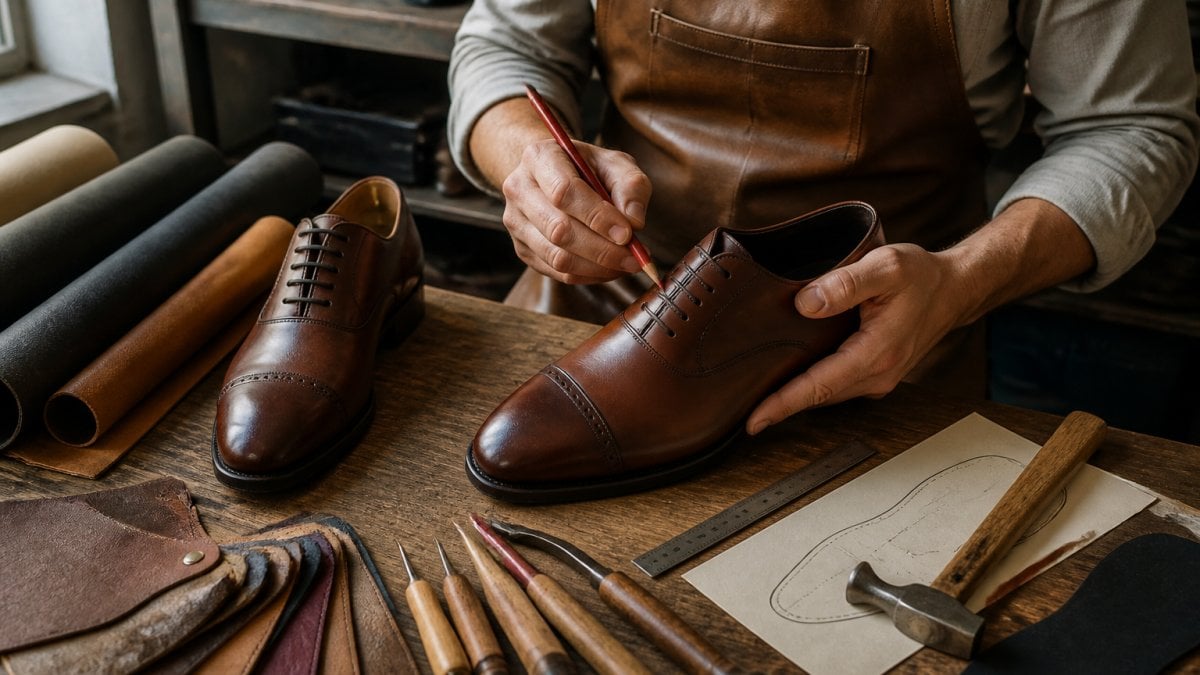
Design your own leather shoes with our step-by-step guide. From choosing leather to the bespoke design process, create custom made leather shoes online.