

Last Updated: October 12, 2026
Between 63% and 72% of people wear shoes that don’t match the width or length of their feet, according to research published in the Journal of Foot and Ankle Research. If you have wide feet, that statistic probably isn’t news.
Here’s the core issue. Most wide-fit shoes are built on a single last, then duplicated for both feet.
This guide walks through measuring each foot separately, understanding lasts, comparing made-to-measure with true bespoke, and knowing what to ask before you order.
The evidence on footwear fit is blunter than most shoe guides admit. Research in the Journal of Foot and Ankle Research on incorrectly fitted footwear found that a majority of adults wear shoes mismatched to their foot dimensions. That mismatch links to foot pain and common foot disorders.
Asymmetry research is thinner. A University of Otago doctoral thesis on footwear asymmetry examined mediolateral asymmetry in worn footwear and how to quantify it, though the supplied findings don’t report specific measurements. The takeaway: asymmetry is real, measurable, and routinely ignored by mass production.
Measuring feet for custom shoes means recording length, width, and instep circumference for each foot independently, ideally at the end of the day when feet are at their largest. Never measure one foot and assume the other matches.
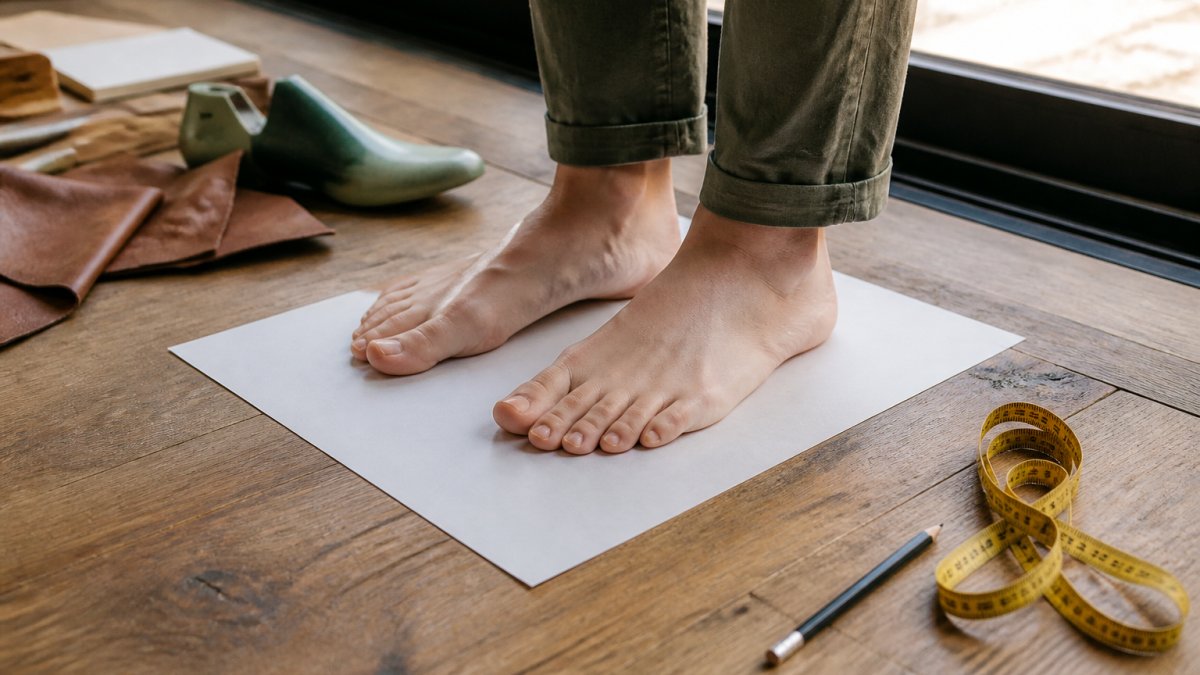
Work through this in order, and write every number down twice, once per foot:
Expect the numbers to differ. A few millimetres of length difference is common; a full width difference is where custom shoe lasts earn their keep. Send both sets of measurements, not an average.
Custom shoes for different-sized feet usually address length through split sizing: order the left shoe in one size, the right in another. That solves perhaps half the problem.
Width asymmetry is the harder case. Split sizing assumes both feet share the same width grade, which they often don’t. A proper custom last is shaped to each foot’s actual outline, including forefoot width, toe spread, and heel width independently. Volume matters too. If one instep sits higher, the last needs extra room there without loosening the rest of the shoe.
A shoe last is the solid form, shaped like a foot, over which a shoe is built. It determines length, width, toe shape, instep height, and heel fit. Every fit problem you’ve ever had traces back to a last that wasn’t shaped like your foot.
The forefoot is where wide feet suffer most. A last with an insufficiently wide forefoot compresses the toes, and a shallow toe box prevents toes from spreading naturally on push-off. For asymmetric feet, the last must be shaped per foot, not mirrored from a single design.
When you evaluate a maker, ask directly: is the last built to my measurements, or selected from a stock range and adjusted?
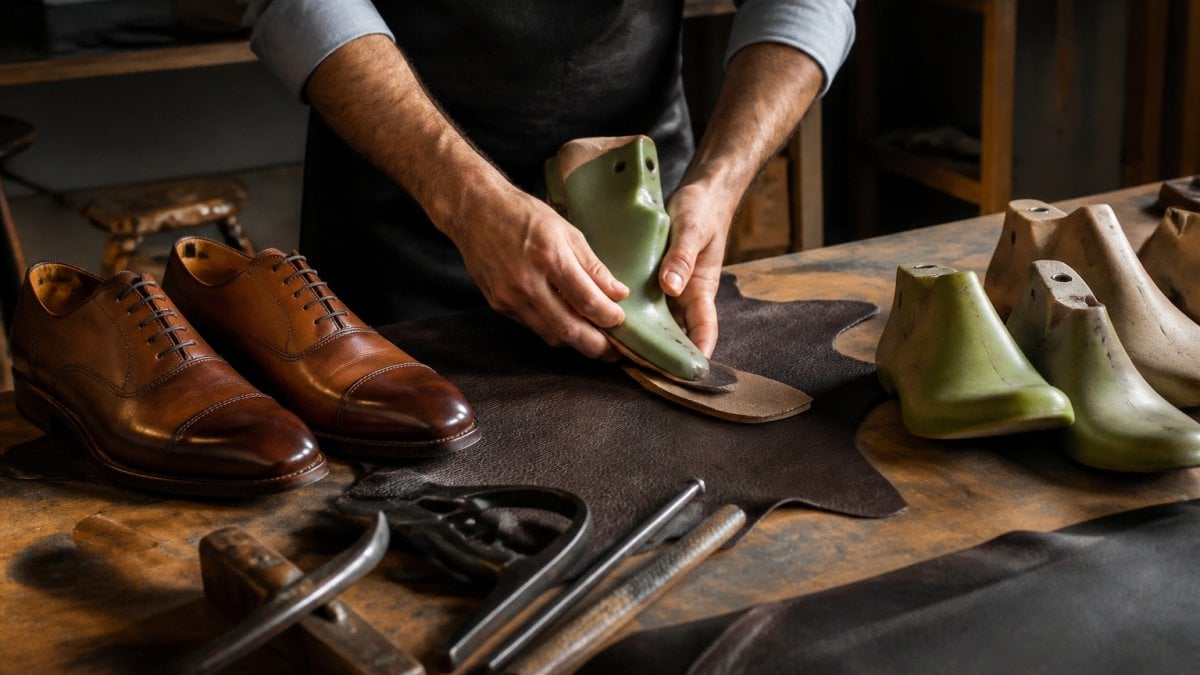
Made-to-measure shoes start from an existing last in your closest size, then adjust width and length within set limits. Bespoke shoes begin with a last carved to your individual measurements, including each foot’s asymmetry.
| Factor | Made-to-Measure | Bespoke |
|---|---|---|
| Starting point | Existing stock last | New last from your measurements |
| Asymmetry handling | Limited adjustments | Each foot shaped separately |
| Fittings | Usually one | Multiple, with trial shoes |
| Best for | Minor fit variations | Pronounced width or volume differences |
For genuinely asymmetric feet, made-to-measure often can’t reach far enough.
Most guides describe the bespoke process as a tidy sequence. In practice, the stages matter less than what happens inside them, especially when your two feet differ in width, volume, or shape. Here is what a bespoke commission often looks like when asymmetry is on the table, and what to watch for at each stage.
A maker who takes asymmetry seriously will measure each foot separately, length, ball width, heel width, instep circumference, and often toe-box height. They should also note how you stand and walk, because a foot that pronates or supinates changes the effective width of the last.
Ask at this stage: Will you build two lasts, or one last adjusted for the second foot? The answer tells you whether the maker treats asymmetry as a core input or an afterthought.
A last is carved or modified to match each foot’s outline. For asymmetric feet, this is where the real work happens. The wider foot may need a broader forefoot and a higher toe box; the narrower foot may need a tighter heel and a lower instep.
A trial shoe is built in a cheaper material so the maker can check fit before cutting your final leather. You should walk in it, not just stand. Report pressure points, slippage, and where your toes feel crowded, on each foot separately.
A common pattern: the wider foot feels fine while the narrower foot slips at the heel. That is a signal the last needs adjustment, not that you should accept it.
Based on the trial, the maker modifies the last. For asymmetric feet, this may mean adding volume to one toe box, narrowing one heel, or adjusting the instep height on one side only. Ask how many adjustment rounds are included. Most bespoke makers include at least one; some include two or three. Get this in writing.
Only after the fit is confirmed does the maker cut your chosen leather. Construction method matters here: a hand-welted or Blake-stitched shoe can be resoled and adjusted later, while a cemented shoe cannot.
When the shoes arrive, wear them indoors first. If a pressure point appears, contact the maker before wearing them outside, many alteration policies only cover unworn shoes. Ask about resoling and whether the last is kept on file for future orders. A maker who keeps your lasts can reproduce the fit years later, which matters if your feet change.
Timelines vary, but a realistic bespoke commission with a trial shoe often takes several months. Confirm the schedule in writing, especially if you need the shoes for a specific event.
Bespoke footwear for asymmetric feet costs more than standard bespoke because it requires two lasts, more fittings, and more maker time. Most makers quote individually rather than publish prices, but you can still prepare by understanding what drives the cost and what to confirm before you pay a deposit. Robert August does not provide specific pricing information; please visit our website for current pricing or a quote.
Because these variables vary so much, a responsible maker will not quote a fixed price until they have measured your feet and understood the complexity.
Ask these questions and get the answers in writing:
At Robert August, every pair is made to order and handcrafted in Spain, which means your measurements drive the build rather than a stock size chart. Our design process starts with your numbers and works from there.
Yes, and this is one of the main reasons people move away from ready-to-wear. A bespoke maker builds a separate last for each foot, so a wider left forefoot or a longer right foot is accounted for in the pattern, not corrected with insoles or padding. Made-to-order and made-to-measure services can also accommodate moderate differences, but the range of adjustment is narrower than a fully bespoke last. Ask the maker directly how they handle a width difference between feet before you order.
Measure both feet separately, standing, at the end of the day when feet are at their largest. Record length from heel to longest toe, forefoot width at the widest point, and instep circumference around the highest part of the foot. Note which foot is larger and by how much in both length and width. Research published in the Journal of Foot and Ankle Research in 2018 found that between 63% and 72% of participants wore shoes that did not accommodate their foot width or length, so measuring rather than assuming your usual size matters.
No. Made-to-measure starts from an existing last that is adjusted to your measurements, which suits wide feet and moderate asymmetry well. Bespoke starts from a last built specifically for your feet, often with a trial fitting before the final shoe is finished. Bespoke takes longer and costs more, but it gives the maker more room to correct a high instep, a wide forefoot, or a significant difference between left and right. The right choice depends on how far your feet sit from a standard last.
Give them your measurements for both feet, not one averaged set. Mention where you feel pressure or pinching in your current shoes, whether you wear orthotics, and how much room you need across the forefoot and toe box. If one foot is longer or wider, say so in numbers. A maker building custom shoe lasts needs to know about high instep, foot volume, and any pressure points before cutting leather, because corrections after the shoe is made are limited.
Wide asymmetric feet expose every shortcut in shoe manufacturing, and most ready-to-wear options simply can’t answer them. Robert August builds made-to-order footwear around your individual measurements, handcrafted in Spain and delivered worldwide with free shipping. Browse our collection and start with your own measurements, then let us shape the rest.

Bespoke shoes for wide asymmetric feet: measure each foot, choose custom lasts, and compare made-to-measure vs bespoke before you order.
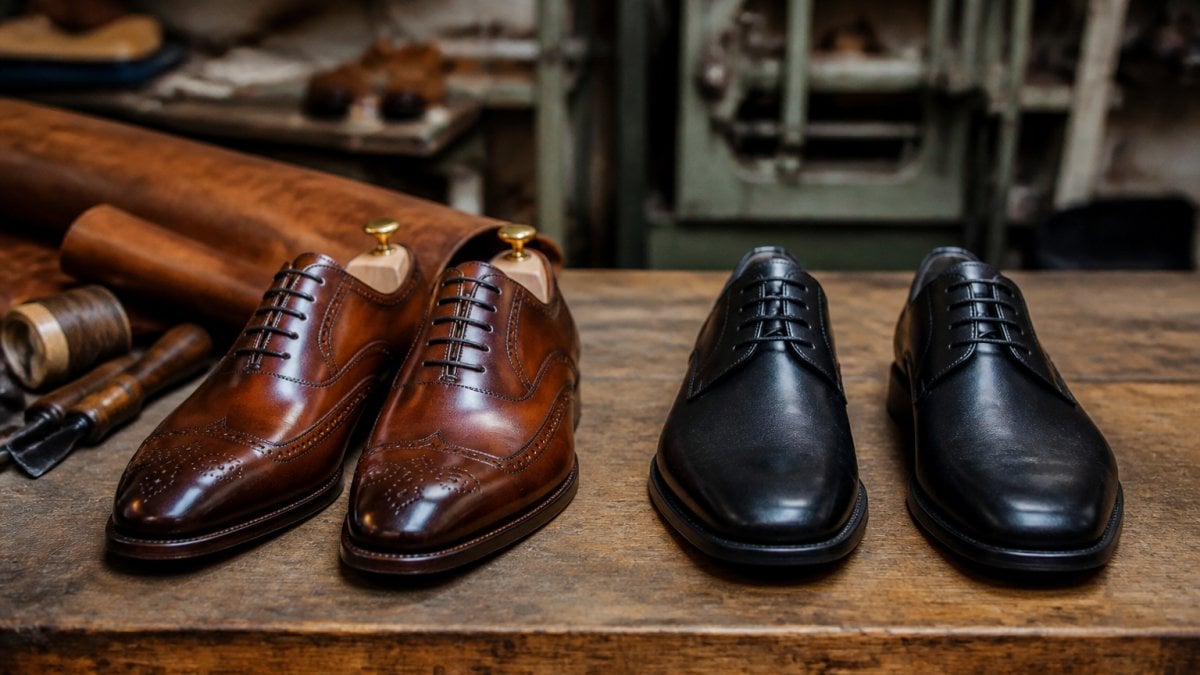
Handmade leather shoes offer superior craftsmanship and durability, but mass-produced options provide consistency and value.
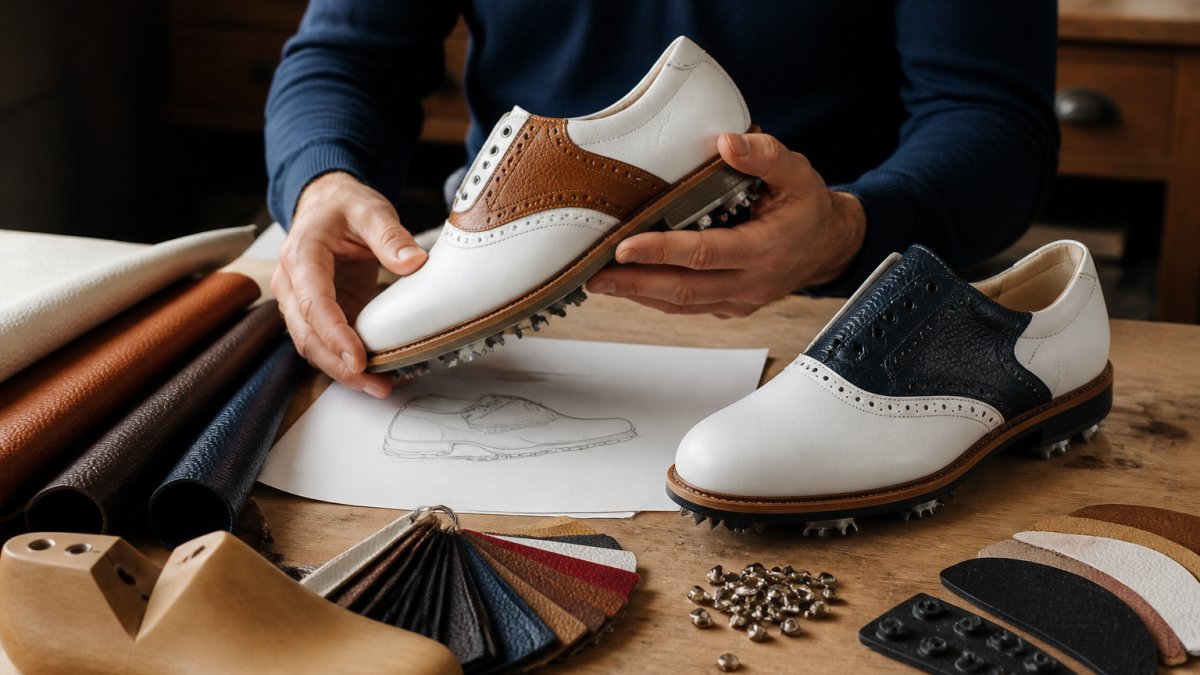
Discover the best custom golf shoes for men in 2026. Compare designs, fit, materials, and pricing to find your perfect pair.
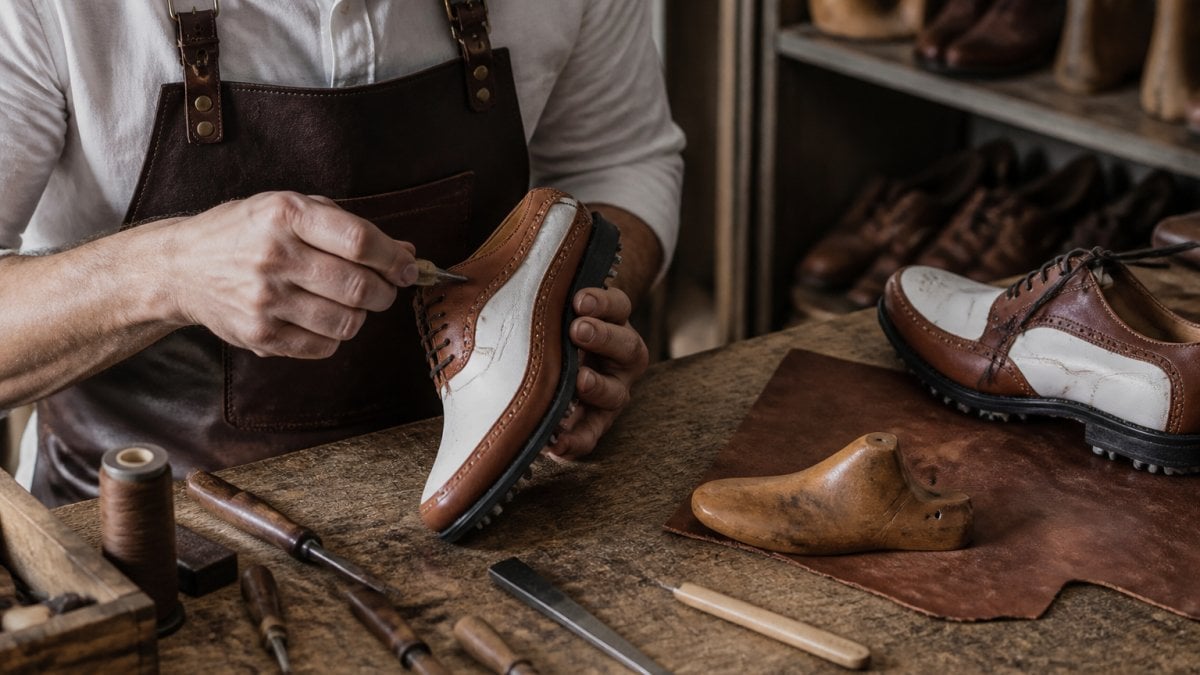
Discover why handmade leather golf shoes deliver superior comfort, durability, and performance. Learn how craftsmanship impacts your game and longevity.