

Last Updated: October 14, 2026
The global market for custom shoes was valued at USD 0.92 billion in 2025, according to Fortune Business Insights’ custom shoes market report, yet the same research shows wildly different valuations depending on who you ask. So when someone asks whether custom shoes are worth the price, the honest answer is: it depends on whether a standard shoe has ever actually fit you.
At Robert August, we build made-to-order footwear because we believe fit is not a luxury. This guide breaks down real price ranges, the cost-per-wear math, and the difference between bespoke, made-to-measure, and merely customized. Below, we’ll show you exactly how to decide if the investment makes sense for your feet and your wardrobe.
The 56% of Americans who told Talker Research’s 2026 shoe-buying survey they regularly buy shoes they later regret because they are uncomfortable are the people this question matters to most. If off-the-rack shoes already fit you perfectly, custom footwear is a want, not a need.
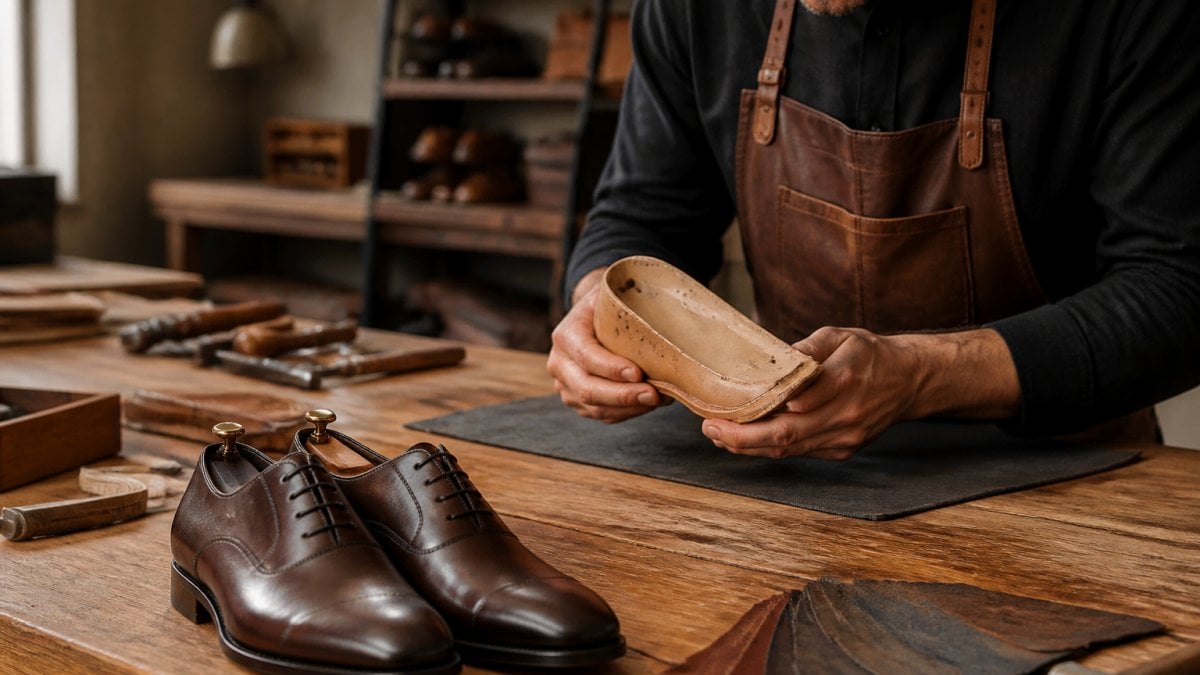
Bespoke shoes are made from a unique last built to your individual foot measurements, with no pre-existing pattern. Made-to-measure shoes adapt an existing last to your measurements. Customized shoes start from a stock design that you alter in color, material, or detailing.
The distinction matters because it decides the price. Bespoke commands the highest premium because a new last must be carved and the pattern drafted from scratch. Made-to-measure and customized options sit lower because the base shape already exists.
Robert August sits in the made-to-order and customized space: you choose the leather, lining, sole, and detailing, and skilled artisans in Spain handcraft each pair. It is not a bespoke last, and we won’t pretend otherwise.
Custom footwear pricing spans a huge range, and the gap between entry-level and top-tier makers is wider than most buyers expect. Bondeno Shoes’ 2026 bespoke pricing guide notes that entry-level bespoke pairs start around $3,000 to $5,000, with luxury houses charging considerably more.
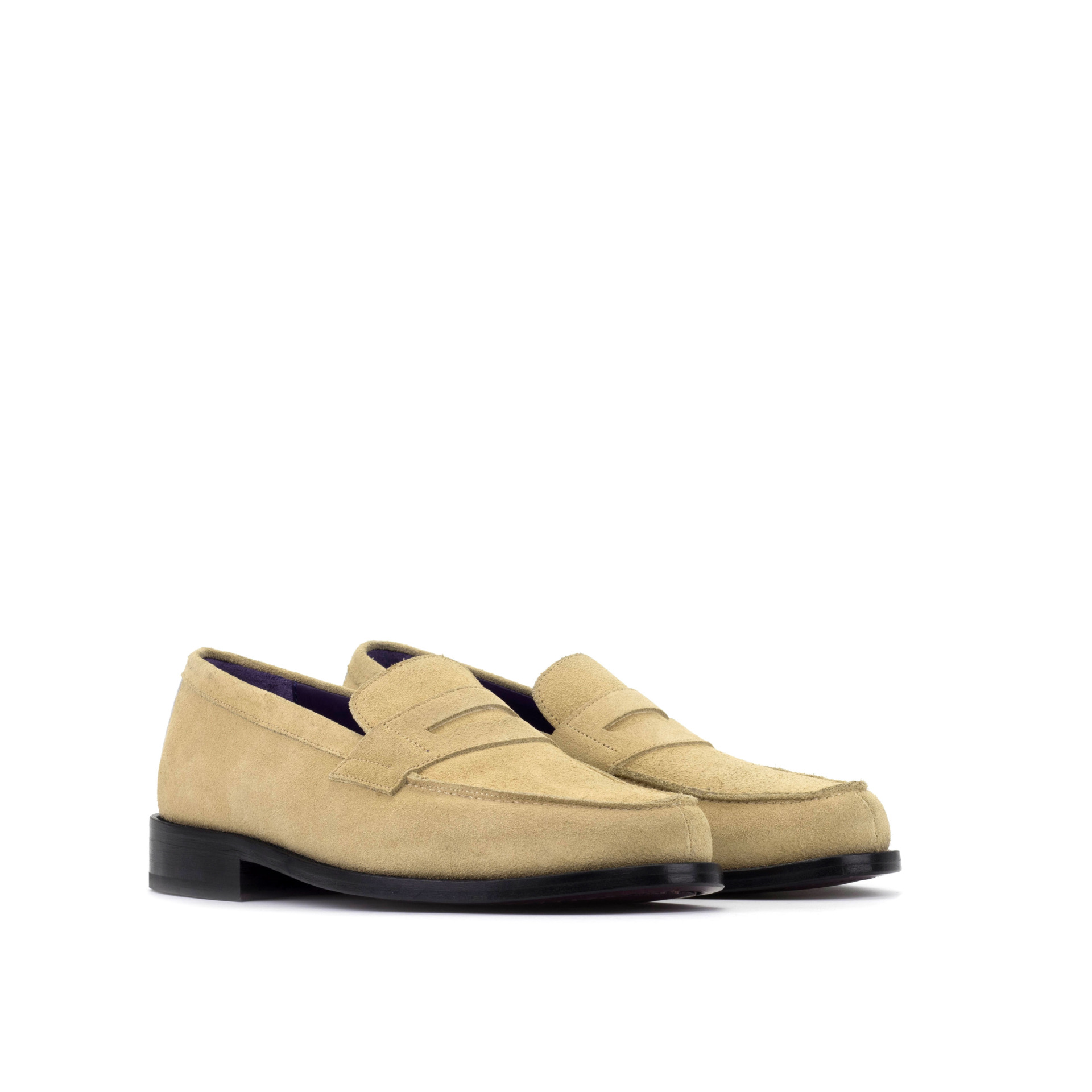
Made-to-order and customized shoes sit far below that. Our own made-to-order collection starts at $379 for the Aldine Ave. Penny Loafer No. 6031, $389 for the Belmont Ave. Oxford, $399 for the Madison St. Chukka Boot No. 5932 RTW, and up to $424 for the Kinzie St. Balmoral Boot.
| Tier | Typical Price Range | What Drives the Cost |
|---|---|---|
| Customized (stock last) | $150-$400 | Material upgrades, color, detailing |
| Made-to-measure | $379-$600 | Adjusted fit, better leathers, construction |
| Entry bespoke | $3,000-$5,000 | New last, multiple fittings, hand-welting |
| Luxury bespoke | $5,000+ | House name, rare leathers, exclusivity |
That is a 10x spread between the cheapest customized pair and entry bespoke. Knowing which tier you actually need is the whole game.
The real difference between custom and ready-made footwear comes down to three things: fit, materials, and how long the shoe survives. Off-the-rack shoes are built to an average last that fits almost no one perfectly. Custom and made-to-order shoes are built to a specific foot.
Here is the trade-off in plain terms:
| Factor | Off-the-Rack | Custom / Made-to-Order |
|---|---|---|
| Fit | Average last, limited width options | Built or adjusted to your measurements |
| Materials | Often corrected grain, synthetic linings | Full-grain leather, calf or suede linings |
| Construction | Cemented, rarely resoleable | Blake stitch or Goodyear welt, resoleable |
| Upfront cost | $80-$250 | $379-$5,000+ |
| Lifespan | 1-3 years typical | 5-15+ years with care |
| Repairability | Usually none | Full resoling and repair possible |
The catch is timing. Custom shoes take weeks to arrive, and off-the-rack shoes are on your feet today. If you need something for a wedding next weekend, this is not the route.
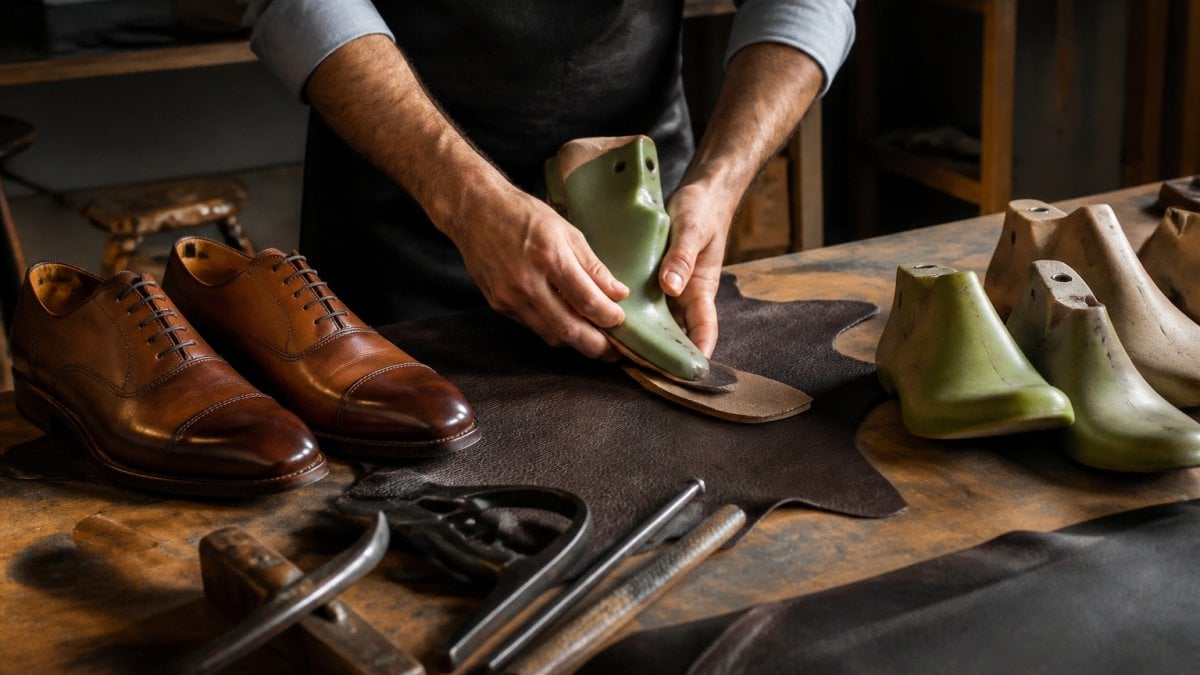
Measuring feet for bespoke shoes means capturing length, width, arch length, and heel-to-ball measurement on both feet, ideally at the end of the day when feet are at their largest. Most people have one foot slightly larger than the other, and that asymmetry is exactly what custom footwear exists to solve.
You need four numbers: heel-to-toe length, heel-to-ball length, width at the widest point, and instep girth. A tailor’s tape and a piece of paper against a wall will get you there.
If you have wide feet, a high instep, or a bunion, ready-made shoes will fight you forever. This is where made-to-order earns its keep. Our digital design tool lets you specify fit preferences alongside materials, and every pair is handcrafted in Spain, so the adjustments happen before the shoe is built rather than after.
Here is the part most buying guides skip: custom footwear is expensive and, once it is cut and stitched, effectively non-returnable in the way a department-store shoe is. A half-size error in a made-to-order pair usually means a remake, not a refund, and that adds weeks to your timeline. Before you commit, ask the maker three questions: Understanding the nuances of bespoke production helps clarify why the expensive streetwear value proposition remains so contentious for those weighing long-term utility against immediate financial commitment.
A common pattern among first-time custom buyers is to measure in the morning, when feet are smallest, and then wonder why the finished shoe feels tight by afternoon. Measure at the end of the day, measure both feet, and if you are between sizes, size up rather than down. Leather stretches with wear; it does not shrink.
Handmade shoes durability comes down to construction, not marketing. A Blake-stitched or Goodyear-welted shoe can be resoled repeatedly because the sole is stitched rather than glued, which is why a well-maintained pair can outlast three or four cemented pairs.
Longevity claims are easy to make and rarely costed out. Here is what actually keeps a stitched shoe alive, and what it costs to keep it that way:
A $150 cemented shoe that lasts 18 months costs more per year than a $400 stitched shoe that lasts eight years. That math is the entire argument, but it only holds if you actually maintain the shoe. A neglected stitched shoe can fail faster than a cheap one, because the failure mode is cracked leather, not a worn sole.
Most footwear guides stop at “it lasts longer.” They rarely address what happens at the end. A stitched leather shoe that has been resoled and conditioned for years can often be donated, refurbished, or broken down for leather salvage. A cemented synthetic shoe typically goes to landfill, where its rubber and plastic components can persist for decades. If lifecycle impact matters to you, construction method is the single biggest lever, more than material choice, more than brand.
The practical takeaway: buy stitched, rotate, use trees, condition twice a year, and resole before the welt is exposed. Do that and the durability claim stops being marketing and starts being arithmetic.
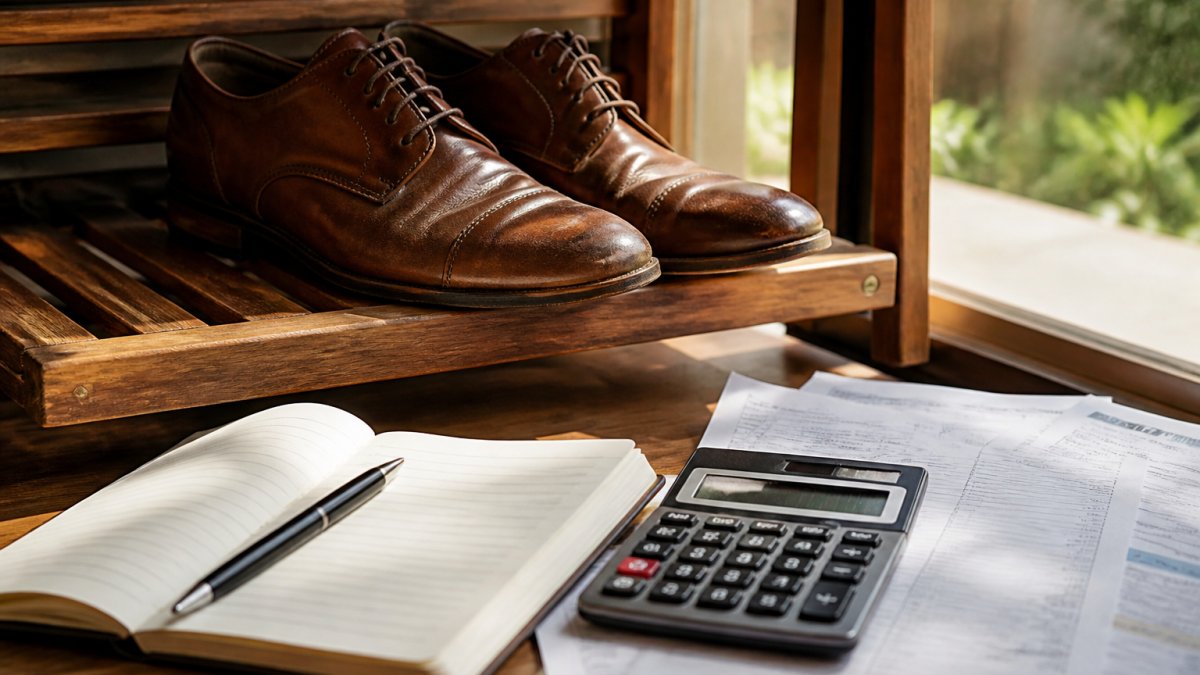
Cost per wear is total purchase price plus maintenance divided by the number of times you wear the shoe. It is the only fair way to compare a $150 department-store pair against a $400 made-to-order pair.
Run the numbers. A $150 cemented shoe worn twice a week for 18 months is roughly 156 wears, or about $0.96 per wear, before you factor in that it cannot be repaired.
| Shoe | Price | Wears | Cost per Wear |
|---|---|---|---|
| Off-the-rack (cemented) | $150 | 156 | $0.96 |
| Made-to-order (stitched) | $389 | 624 | $0.62 |
| Entry bespoke | $3,500 | 1,500 | $2.33 |
The made-to-order pair wins on cost per wear in this scenario. Entry bespoke only pays off if you wear it for a decade or more, which is why Permanent Style’s assessment of bespoke value argues bespoke is not worth it unless you are in for the long haul.
The real challenge is not deciding whether custom shoes are worth the price. It is finding a maker who delivers genuine craftsmanship without the bespoke price tag.
It depends on the level of customization. Robert August made-to-order styles start at $379 for the Aldine Ave. Penny Loafer No. 6031, $389 for the Belmont Ave. Oxford, $404 for the Cicero Ave. Single Monk, and $424 for the Kinzie St. Balmoral Boot. Entry-level bespoke pairs from specialist makers start around $3,000 to $5,000 according to Bondeno Shoes’ 2026 price guide. The gap reflects hand-lasted construction, multiple fittings, and single-maker labor.
Bespoke shoes are built from a unique last created for your feet, usually with multiple in-person fittings. Made-to-measure shoes, like Robert August’s range, adjust an existing last to your measurements and chosen materials. Bespoke offers the closest possible fit; made-to-measure delivers most of the fit benefit and full design control at a fraction of the price, which is why it suits business-casual and golf wardrobes well.
For most people, yes, because the fit follows your foot shape rather than an average last. Talker Research reports 56% of Americans regularly buy shoes they later regret because they are uncomfortable, which points to a fit problem standard sizing cannot solve. Custom footwear addresses width, arch, and asymmetry directly. If standard shoes already fit you well, the comfort gain is smaller and the price premium harder to justify.
Lifespan depends on construction and care. Blake-stitched and Goodyear-welted shoes can be resoled, which extends wear well beyond cemented mass-produced pairs. Robert August’s Madison St. Chukka Boot No. 5932 RTW uses Blake Stitch Construction specifically to allow future resoling. Rotating two or three pairs, using shoe trees, and conditioning leather regularly will stretch that lifespan further. Exact years vary with how often you wear them and the surfaces you walk on.
They are one of the clearest cases where the price makes sense. Wide feet, high arches, bunions, or one foot larger than the other are difficult to accommodate in ready-made footwear. Custom shoes are built around your measurements, so the shoe stops fighting your foot. If you have spent years settling for the least-bad pair on the shelf, made-to-measure or bespoke footwear solves a problem that off-the-rack options cannot.

Are custom shoes worth the price? We break down costs, fit, durability, and cost per wear so you can decide before you invest.
Bespoke shoes for wide asymmetric feet: measure each foot, choose custom lasts, and compare made-to-measure vs bespoke before you order.
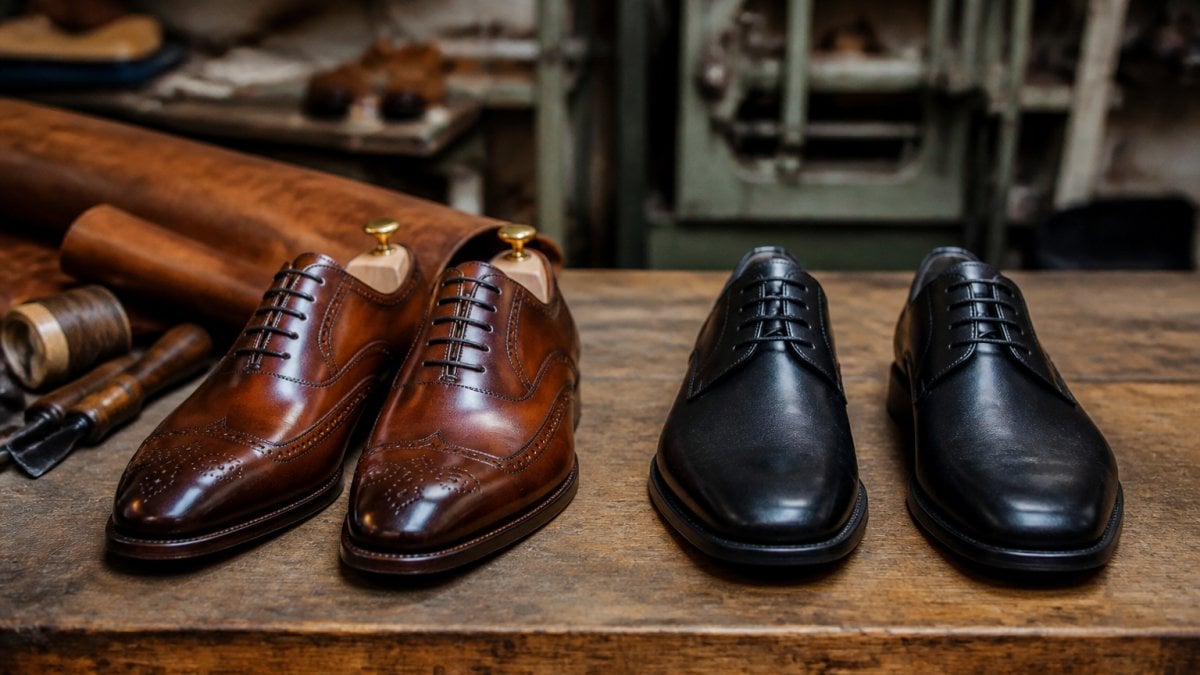
Handmade leather shoes offer superior craftsmanship and durability, but mass-produced options provide consistency and value.
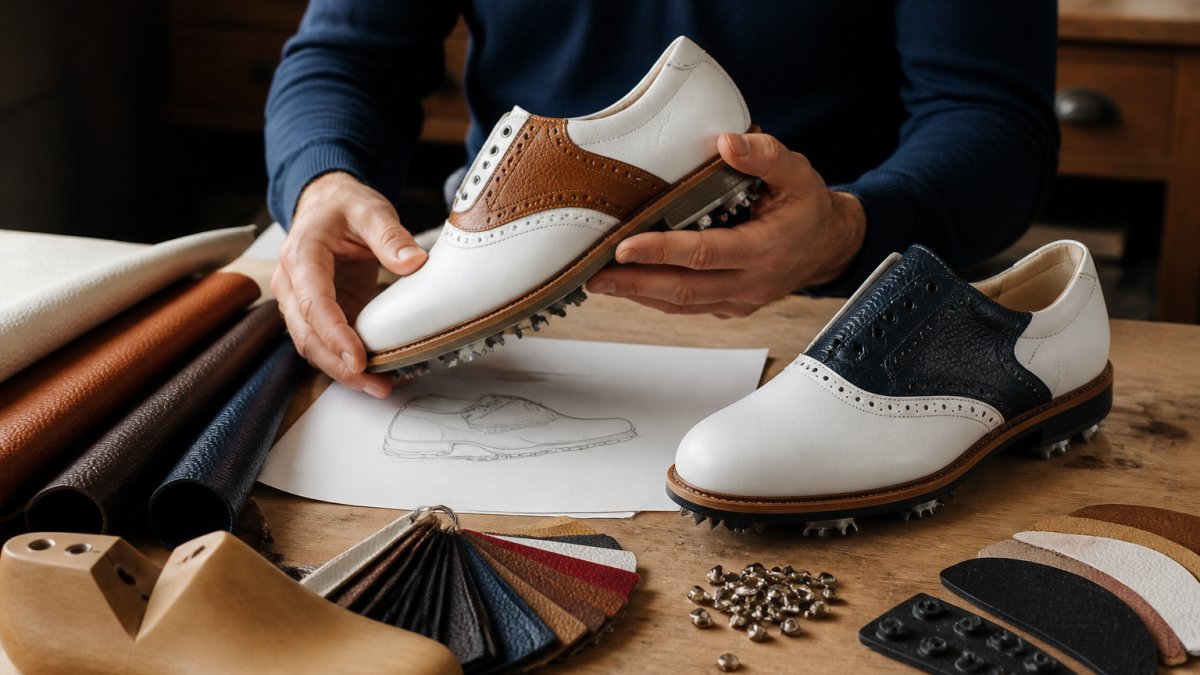
Discover the best custom golf shoes for men in 2026. Compare designs, fit, materials, and pricing to find your perfect pair.