

Last Updated: October 18, 2026
The base shoe decides everything. The global golf-shoe market was valued at $9,394.3 million in 2024 and is projected to reach $12,480.0 million by 2030, according to Grand View Research’s golf shoes market report, so you have no shortage of starting points.
Most guides treat the base as a blank canvas. It is not, it determines whether your finished pair survives a season.
Leather takes paint best. Its smooth grain accepts thin coats and holds a clean edge.
Wool’s textured weave resists paint and suits dye-based color shifts better than brushwork. Synthetic uppers are trickiest: some reject paint outright, and you cannot tell by looking.
Materials decide durability, and durability decides whether your work lasts. A shoe that looks sharp in the clubhouse but frays by hole twelve is a wasted project.
Researchers have studied how sole design interacts with the foot and ground during play, per the kinetic assessment of golf shoe outer sole design features. The lesson for customizers is simple: the upper is only half the shoe.
Here is how the main options compare:
| Material | Paint-Friendly | Water Resistance | Best For |
|---|---|---|---|
| Full-grain leather | High | Good with treatment | Detailed brushwork |
| Patent leather | Medium | High | Bold color blocks |
| Wool | Low | Moderate | Dye-based designs |
| Synthetic mesh | Low | Varies | Lightweight builds |
| Suede | Medium | Low | Texture and contrast |
Test on a hidden area first. Inside the tongue or under the lace panel works well.
Leather acrylics bond reliably to smooth calf. Fabric paints suit wool. Always finish with a flexible sealant, or the paint will crack along the flex point where your foot bends.
Most design-ideas lists stop at “pick a color you like.” That is not a design method. A custom golf shoe has to read clearly from address position, survive eighteen holes, and still look intentional in the clubhouse. The ideas below are organized by how much visual noise the shoe can carry.
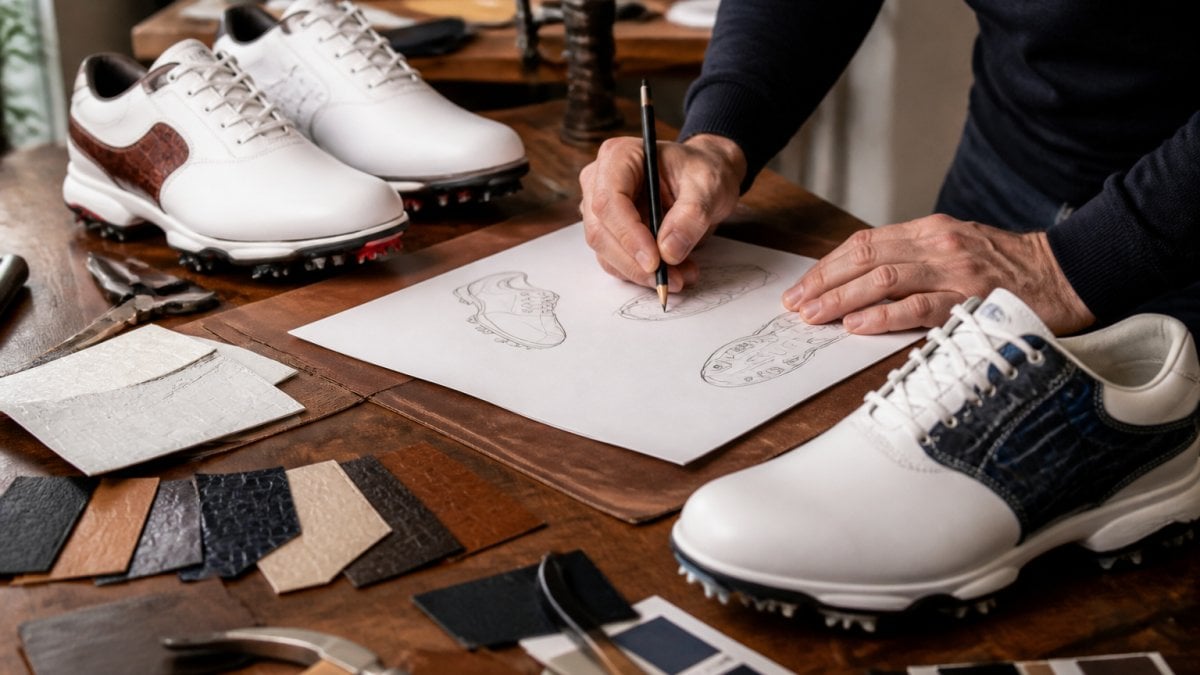
A golf shoe has four readable zones: the toe cap, the saddle (midfoot), the heel counter, and the collar. Decide which is the hero before you touch paint. Bespoke makers commonly use one hero zone, one supporting zone, and two quiet zones, a ratio that keeps the shoe legible at distance.
If every zone is loud, the shoe reads busy from ten feet and muddy from thirty. If every zone is quiet, the personal detail disappears.
Course light is harsh and flat. Colors that look rich on a screen often wash out on grass. Three schemes hold up reliably:
Avoid neon accents on the toe cap: they draw the eye downward at address, the opposite of what most players want over the ball.
Pattern work is where hand-painted shoes either look custom or homemade. The difference is edge control, not ambition.
Personal marks work as a signature, not a billboard. A name, initials, squad number, or club crest on the heel counter or tongue is enough.
For team or club orders, standardize the base and hero zone across the squad, then vary only the heel-counter mark per player. That keeps the group coordinated without turning every shoe into a one-off.
Custom-order configurators are a design vocabulary, not a template. Browsing a major custom program’s material and color menus shows which combinations manufacturers consider producible, a useful sanity check. Treat those menus as a palette reference, then apply the hierarchy above so the result reads as your design rather than a stock configuration.
Painting is where most DIY projects go wrong, almost always for the same reason: too much paint, too fast. Thin layers beat thick ones every time.
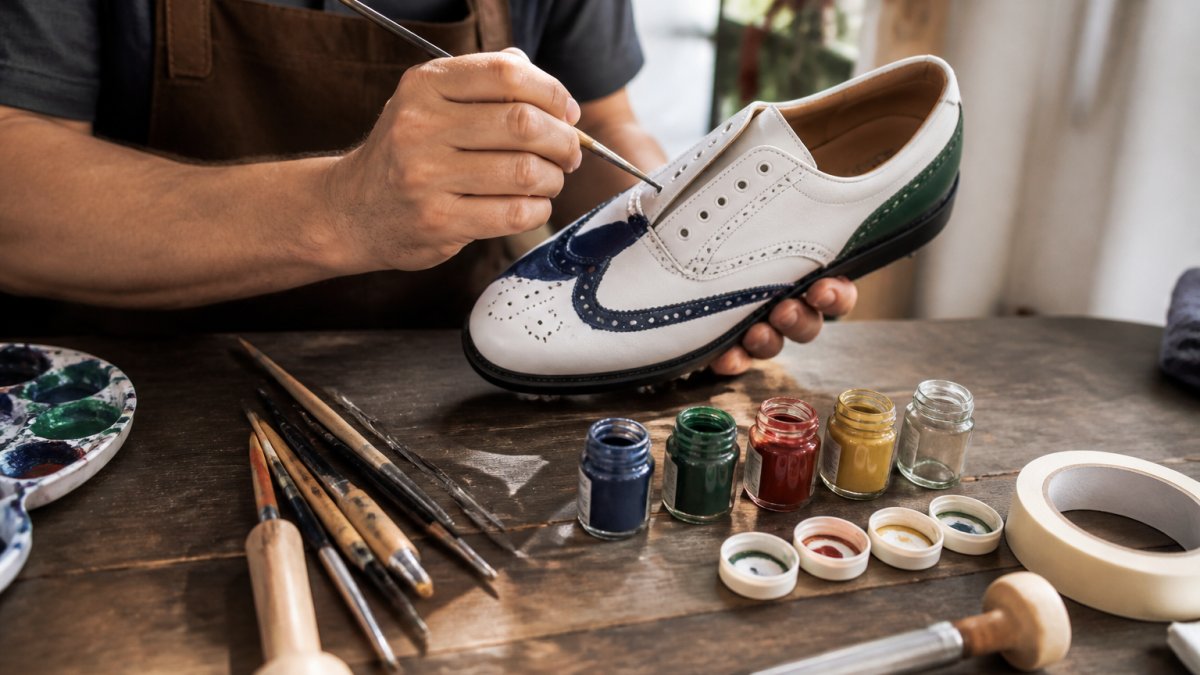
Refining the aesthetic details of your footwear serves as the perfect foundation for styling professional golf apparel to create a cohesive and polished look on the course.
Work through these steps in order:
Preparation takes longer than painting. Skipping it is why paint peels.
Mix small batches. A few drops of paint plus a drop of thinner gives you control. Keep notes on ratios so you can match the shade later for touch-ups.
The Lincoln Ave. Saddle Shoe →
Fit comes before design. A beautifully painted shoe that pinches is unwearable, and no craftsmanship fixes it.
FootJoy’s fitting guide reports that properly fitted golf shoes are associated with a 6-21% performance increase, per FootJoy’s golf shoe fitting guide.
Measure at the end of the day, when feet are largest. Trace both feet and use the larger measurement.
For made-to-order footwear, share your measurements directly.
Traction is a safety and rules issue before it is a style choice. A custom shoe that slips on wet turf, or carries hardware your course prohibits, is a failed project no matter how good the paint is. This section covers the hardware decisions, conversion mechanics, and course-rule checks most design guides skip.
Replaceable-cleat shoes use threaded receptacles in the outsole to hold soft spikes, which wear down and cost grip on soft ground and wet turf.
Replaceable cleats win on soft ground, wet weather, and steep lies. Spikeless wins on firm, dry turf, comfort over long walks, and convenience because there is nothing to replace. Neither is universally better; match the hardware to the conditions you actually play.
Most courses require soft spikes and prohibit metal spikes because metal damages greens. Many private clubs and tournament committees also have footwear policies beyond spike type, covering closed-toe requirements or restrictions on non-golf athletic shoes. Confirm the policy with the club pro or tournament committee before you drill, glue, or convert anything. A conversion fine at your home course may be disallowed at an away event.
Sneaker conversion is popular and riskier than it looks: you are adding hardware to a sole never designed to hold it. The failure modes are predictable:
Adding receptacles and spikes changes stack height and stiffness underfoot, which can affect fit and walking stability. A shoe that felt fine flat can feel tipped or loose once hardware is added. After any conversion, walk a full round before trusting the pair in competition, and check that the heel does not slip and the toe box does not pinch.
Every modification trades against the shoe’s original waterproofing and breathability. Drilling for receptacles creates new entry points unless each is sealed. Treat waterproofing as a system: seal every new hole, and re-treat leather uppers after the finish cures. Added hardware adds weight and stiff sealants reduce flex, so test the finished pair on a practice round before you rely on it.
Budget the whole project, not just the paint. Brushes, masking tape, sealant, and cleats add up. A written plan keeps the spend predictable.
Care decides lifespan. Wipe shoes after every round, dry them away from direct heat, and re-seal painted areas each season. Store them with shoe trees to hold the shape.
Know when to stop. If the base shoe is worn at the sole or cracked at the flex point, customization is money spent on a failing foundation. Start with a sound pair.
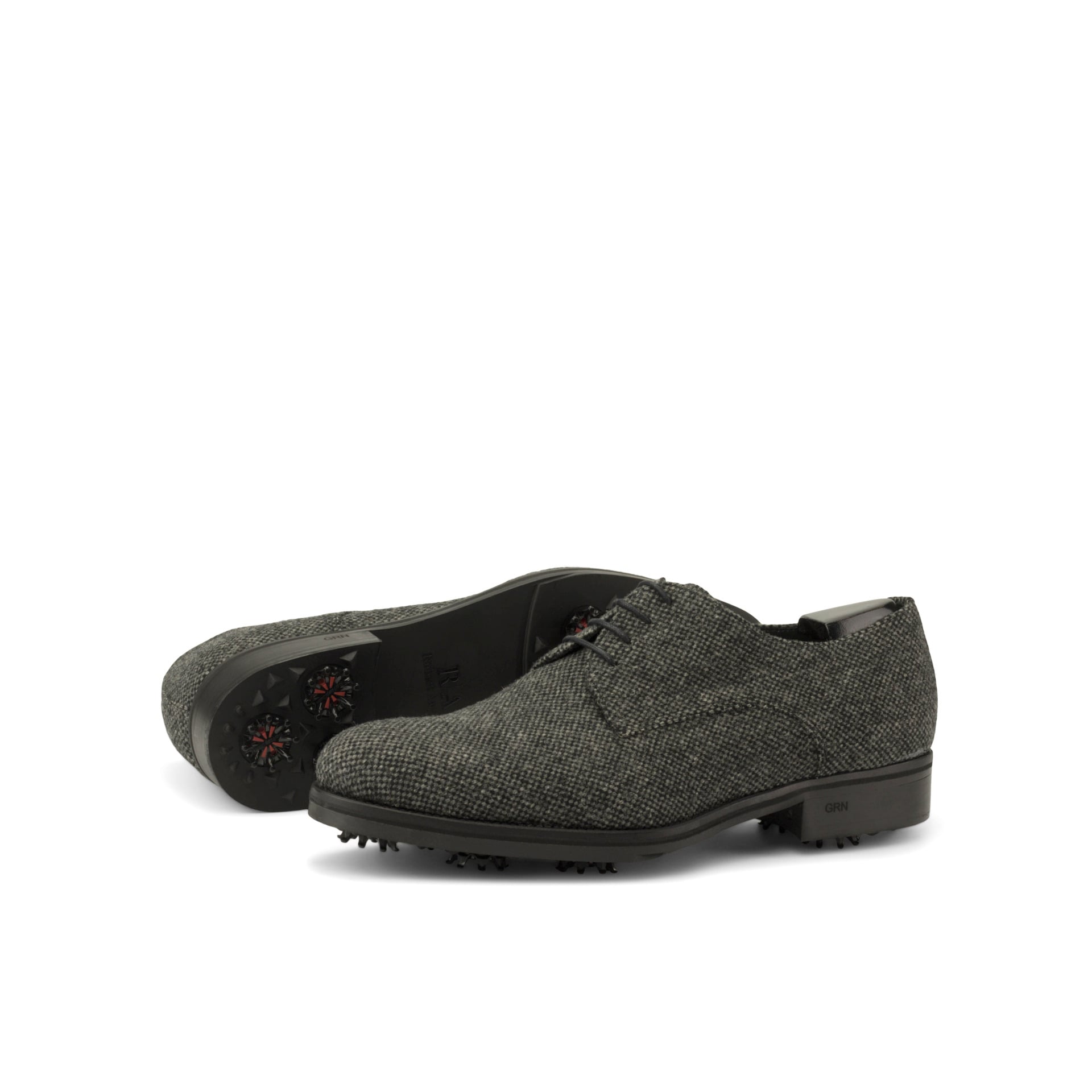
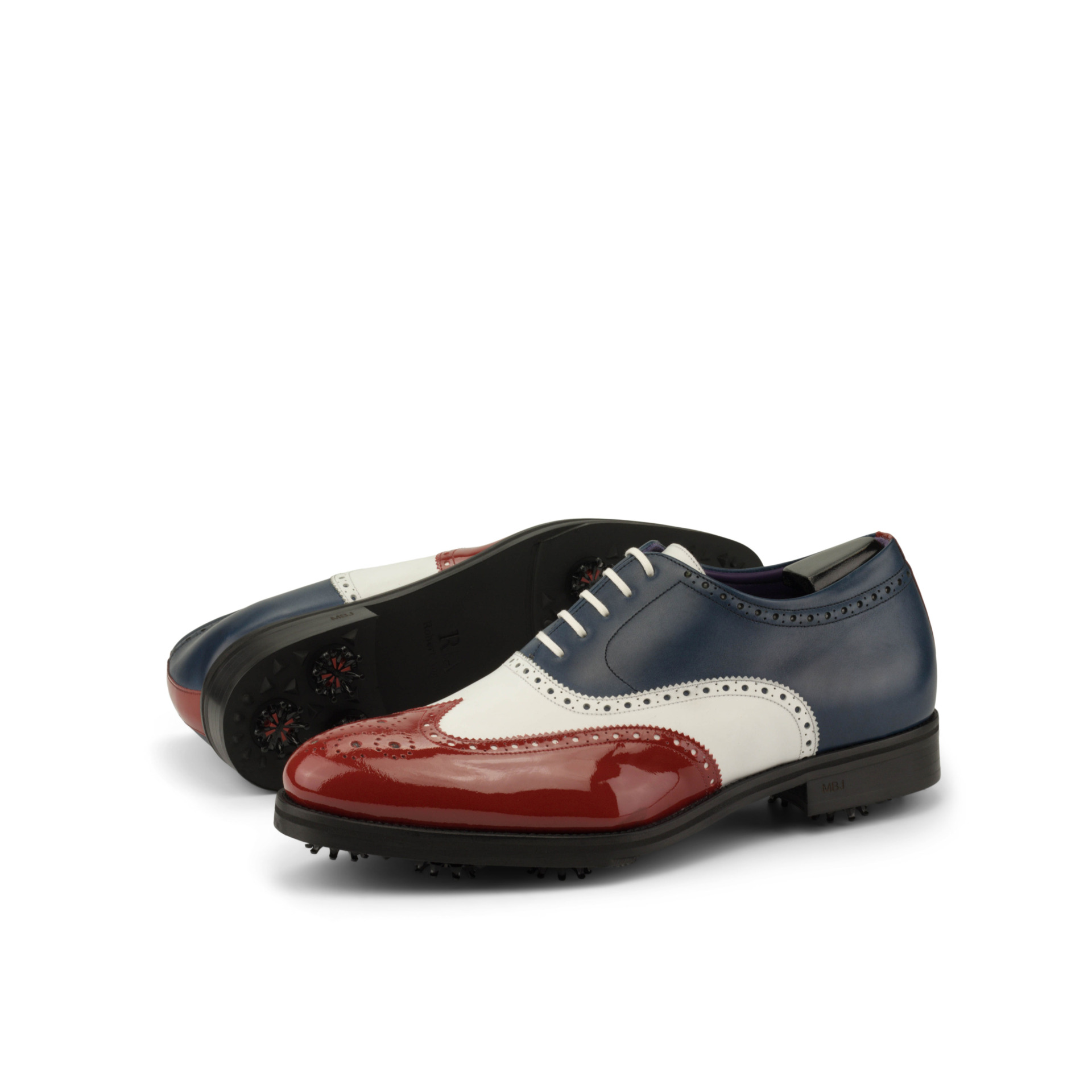
For a pair built right from the start, our The Devon Ave. Full Brogue No. 8375 | Golf Shoes arrives with Softspikes® cleats and can be customized in color and leather. The The Armitage Ave. Derby No. 8370 | Golf Shoes offers a wool upper if you prefer texture over smooth calf.
Most golfers should not size up automatically. Golf shoe fit and sizing depends on the last, the sock you wear, and how your foot sits in the shoe. FootJoy’s fitting guide links properly fitted golf shoes to a reported 6-21% performance increase, though the underlying study details are not published. Measure both feet, allow roughly a thumb’s width at the toe, and check that the heel stays locked. If you have one foot larger than the other, order to the larger foot and adjust with laces rather than buying a full size up.
Full-grain calf leather and nailhead wool are the two most reliable bases for custom golf shoe materials. Leather takes dye and paint predictably and molds to the foot over time. Nailhead wool adds texture and breathes well but needs protection from wet conditions. Robert August builds golf shoes from luxe calf, croco-embossed calf, and nailhead wool, all handcrafted in Spain, with Softspikes cleats for traction. Avoid suede on the course unless you accept that dew and sand will change its appearance quickly.
Sneakers can be converted, but the result is a compromise. For regular play, a purpose-built golf shoe with replaceable cleats gives better stability. Conversion works best for occasional rounds or a display pair.
Keep personalization to the upper and away from structural areas. Colors, patterns, embroidery of initials, a name, or a team logo on the quarter or heel are safe. Avoid painting the welt, the cleat plate, or any seam that flexes with your swing. Use thin, flexible paint layers rather than thick coats that crack. If you want a fully custom order, made-to-order services let you choose leathers and colors at the design stage, so nothing is added after construction.
Designing custom golf shoes rewards patience over enthusiasm. The pair that lasts is the one built on a sound base, painted in thin layers, fitted properly, and cared for after every round.
Robert August has handcrafted made-to-order footwear in Spain since 2016, pairing traditional European shoemaking with a digital design process. You choose the colors, leathers, and details; our artisans build the shoe. Browse our collection and create a pair that reflects your game and your taste.

Learn how to design custom golf shoes that fit properly, perform on the course, and reflect your style. A practical step-by-step guide for golfers.
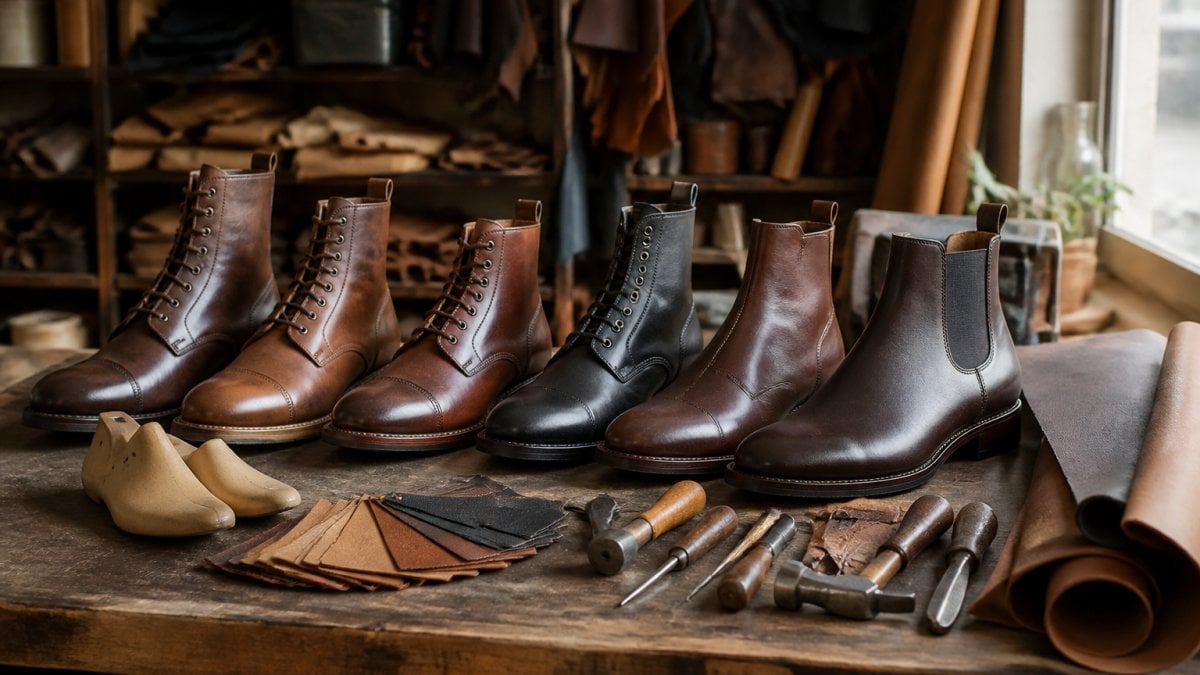
Discover the best premium made to order boots for 2026, handcrafted in Spain with Italian leather and Goodyear welt construction. Prices start at $399.
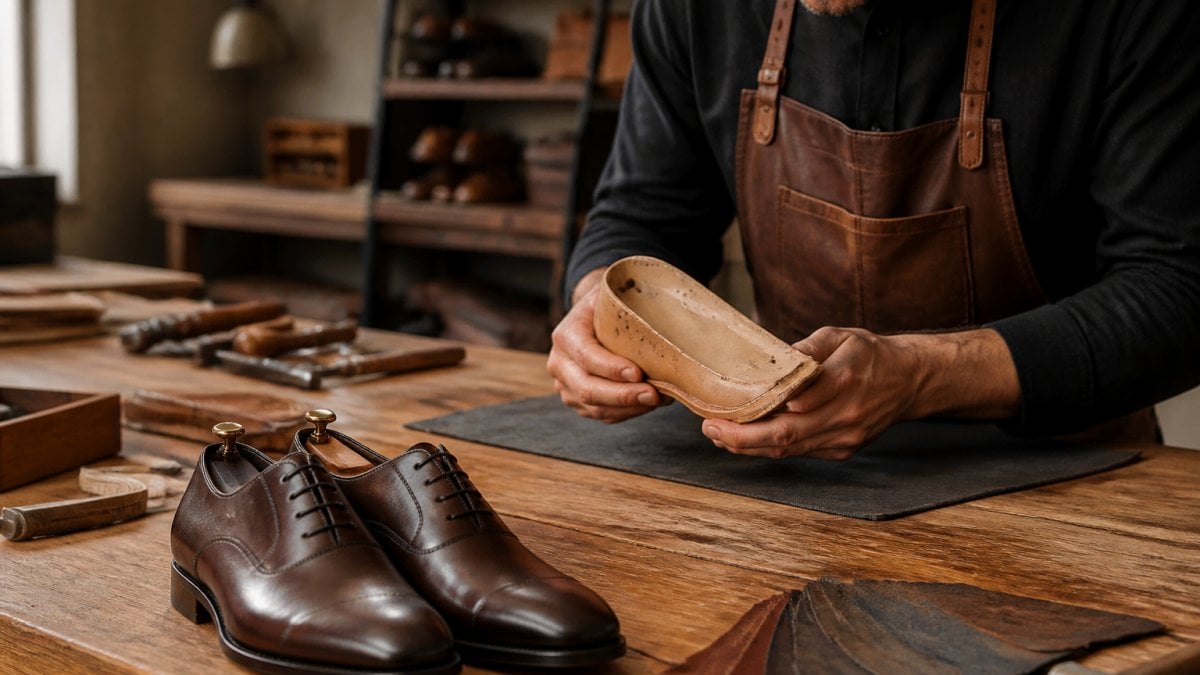
Are custom shoes worth the price? We break down costs, fit, durability, and cost per wear so you can decide before you invest.
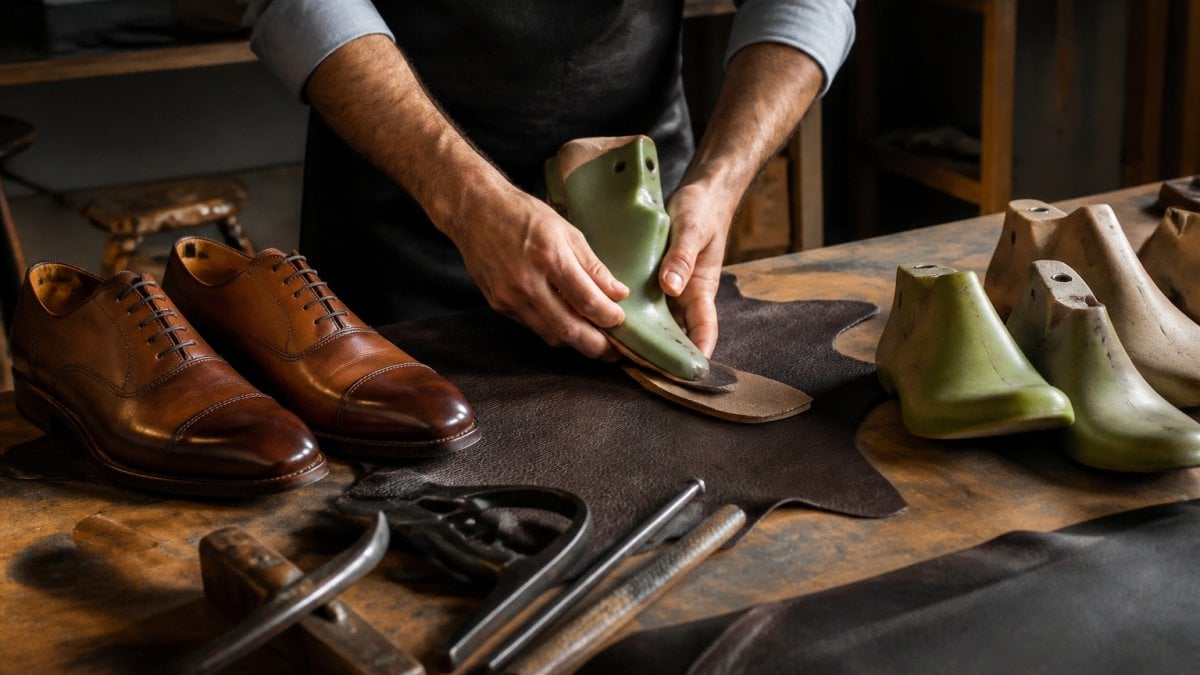
Bespoke shoes for wide asymmetric feet: measure each foot, choose custom lasts, and compare made-to-measure vs bespoke before you order.