

Last Updated: October 19, 2026
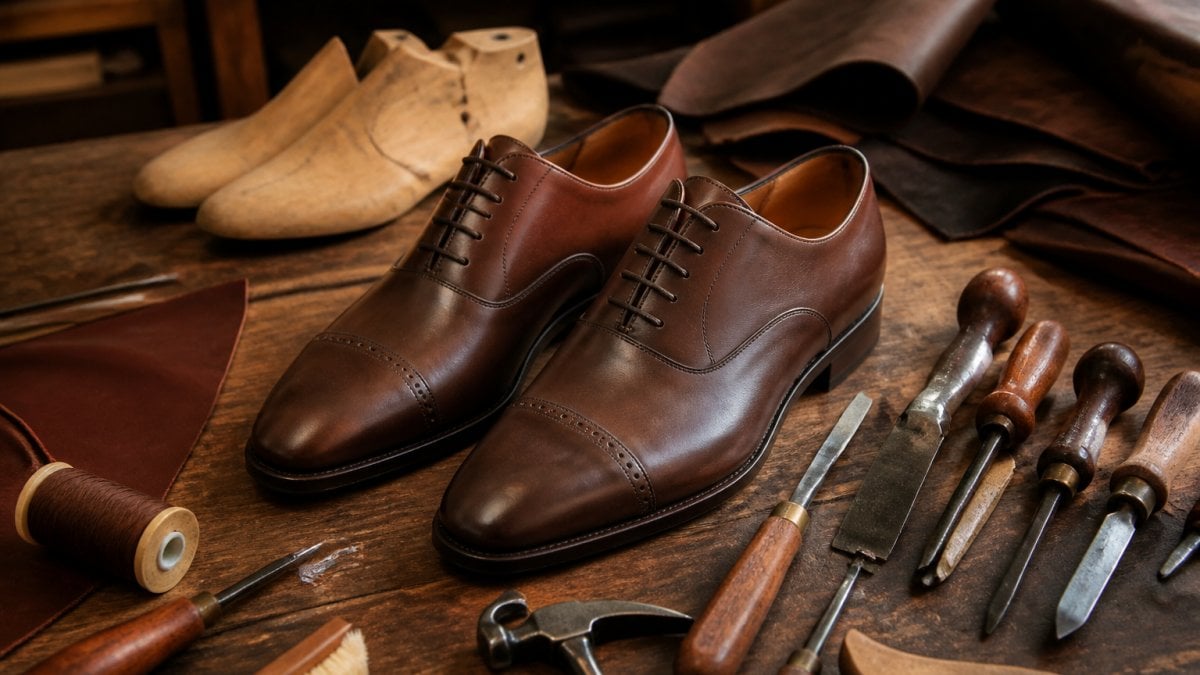
The global custom shoes market was valued at USD 0.92 billion in 2025, according to Fortune Business Insights’ custom shoes market report, and that growth is being driven by professionals who want footwear that fits both their feet and their calendar. At Robert August, we build luxury handmade shoes for business one pair at a time in Spain, and this guide reflects how we would choose between them if we were standing in your shoes.
Here is the shortlist, with the details that actually decide the purchase.
| Style | Price | Construction | Best For |
|---|---|---|---|
| Cicero Ave. Single Monk No. 5744EX | $479 | Goodyear welt | Client-facing days |
| Wabash Ave. Wholecut Oxford No. 5954 RTW | $389 | Blake stitch | Formal boardrooms |
| Grand Ave. Loafer No. 5960 RTW | $489 | Blake stitch | Business casual |
| Fulton St. Chelsea Boot No. 5957 RTW | $399 | Blake stitch | Autumn and winter commutes |
Below, we break down exactly which pair suits which working week, and where most buyers go wrong.

We judged every pair on four criteria: construction method, leather quality, how the shoe behaves across a ten-hour day, and whether it can be repaired rather than replaced. Construction came first because it determines everything downstream.
Goodyear welt construction attaches the sole through a stitched welt, which creates a water-resistant seal and allows a cobbler to resole the shoe repeatedly without touching the upper. Blake stitch produces a slimmer, more flexible profile with a closer fit, but resoling is a specialist job. Both are legitimate; they simply suit different owners.
Leather quality mattered just as much. Full-grain and calf leathers develop patina and soften with wear; corrected-grain leathers look consistent on day one and flat by month six. Every pair here uses calf leather uppers and calf leather lining.
The Cicero Ave. Single Monk is the pair we recommend when your week involves clients, site visits, and weather that refuses to cooperate. The Italian calf upper carries a brown Papiro hand patina, and the black rubber “Rocky” sole handles wet pavement without turning your morning into a balancing act.
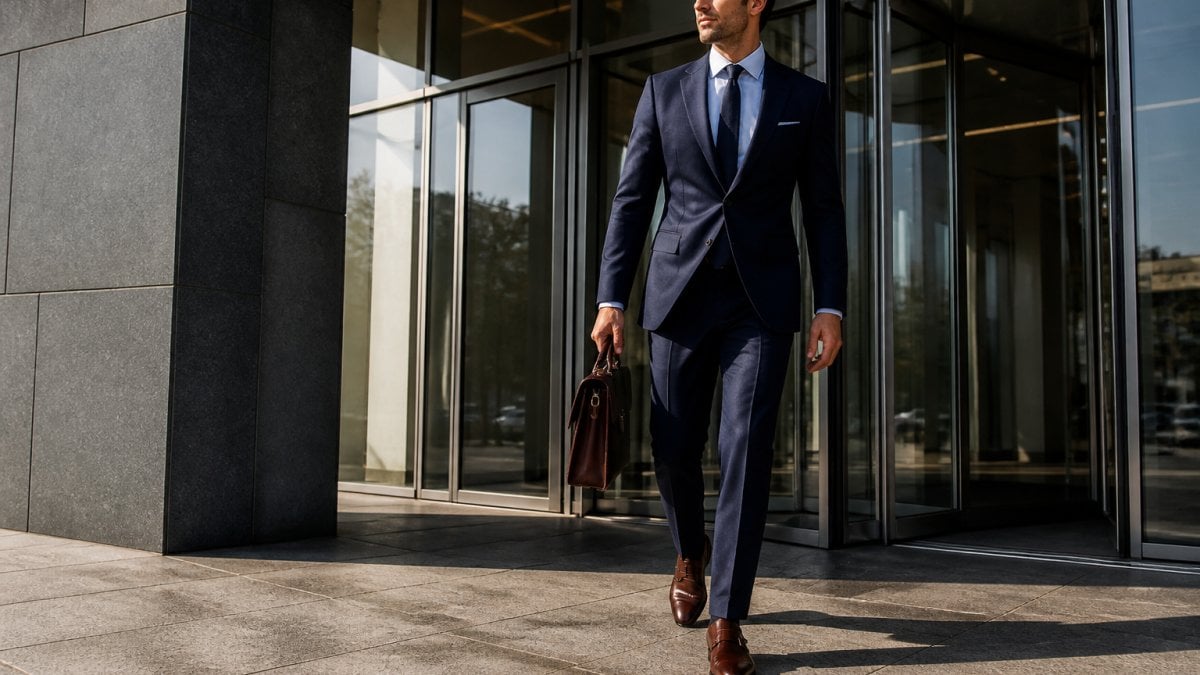
What separates it from a standard dress shoe is the Goodyear welt: the sole can be replaced multiple times, so the upper outlives the rubber. The square nickel buckle provides both function and a polished accent.
At $479, it is also the one most likely to still be in your rotation in 2036.
Wholecut construction is unforgiving. The upper is cut from a single piece of leather, so there are no seams to hide a flawed hide behind. The Wabash Ave. Oxford uses Dark Brown Luxe Calf and gets away with it.
Blake stitching keeps the profile slim, which reads sharper under a suit than a bulkier welted sole. The brown calf lining softens over time, and the hand-painted leather sole adds depth you will not find on a mass-produced oxford.
Where it falls short: Blake-stitched soles are harder to resole than Goodyear welted ones, so this is a shoe for the office and the courtroom, not the commute in February.
Burgundy marbled patina on Italian calf makes the Grand Ave. Loafer the most distinctive shoe here, and no two pairs finish identically. The 312 last gives a rounded toe drawn from English shoemaking tradition, which keeps it formal enough for a client lunch and relaxed enough for Friday.
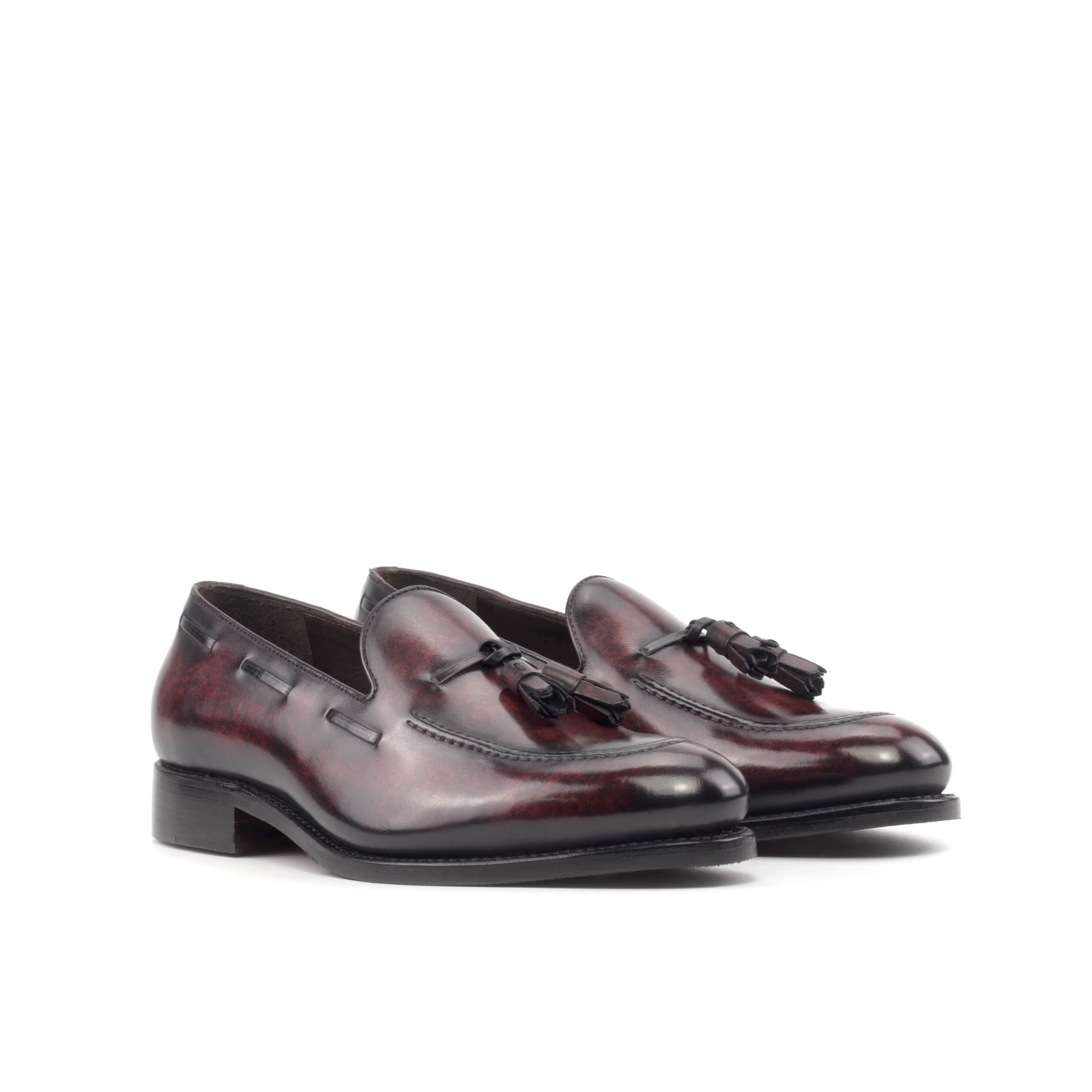
The Blake-stitched construction keeps it light and flexible, and the rubber sole adds traction the leather-soled options lack. Brown calf lining runs throughout.
A common mistake is treating a loafer as a summer shoe. This one works year-round with tailored trousers or dark denim. At $489, it is priced above the oxford.
Chelsea boots earn their place by removing decisions. No laces, no buckles, no thought at 7am. The Fulton St. pairs Black Luxe Calf uppers with dark brown elastic panels, brown calf lining, and a hand-painted black sole on Blake stitch construction.
Built on the 312 last, it sits comfortably between a dress boot and a casual one. It works with tailored trousers and with raw denim, which is a rarer combination than most boot listings admit.
The honest limitation: elastic panels are a wear item. Expect to replace them eventually, and factor that into the $399 price over a decade of use.
The Cicero Ave. Single Monk No. 5744EX →
Most business-shoe buyers conflate three different products under one label. Bespoke, made-to-order, and ready-to-wear are not points on a quality scale; they are different production models with different trade-offs in fit, lead time, durability, and price. Choosing well starts with knowing which model matches your week.
Ready-to-wear (RTW) shoes are built on a standard last in fixed sizes and widths, then finished. You get the shortest lead time and the lowest price, but you accept whatever fit the last gives you. For a professional with an average foot shape, RTW is often the rational choice: a well-made Blake-stitched oxford at $389 will serve a boardroom schedule for years. The limitation is fit variance. If your foot is wide, narrow, or asymmetric, RTW forces a compromise that no amount of break-in fully solves.
Made-to-order (MTO) starts from an existing design and lets you adjust specified variables: patina intensity, buckle style, sole colour, leather choice, and in some cases width. Robert August sits here. Our MTO model handcrafts the pair in Spain on a standard last but accommodates the adjustments a working wardrobe actually needs. Lead time is measured in weeks rather than the six-plus months typical of bespoke, and the price sits between RTW and full bespoke.
Bespoke begins with a personal last carved to your measurements, typically with trial fittings before the final pair is finished. It delivers the closest fit available and the most control over every specification, at the highest price and the longest wait. For a buyer with significant fit challenges or a once-in-a-career pair in mind, bespoke earns its cost. For most professionals building a rotation, it is overkill.
A practical way to decide:
The custom shoes market is projected to grow from USD 0.99 billion in 2026 to USD 1.74 billion in 2034, per Fortune Business Insights’ market projection, which tells you buyers are voting for fit over off-the-shelf convenience. The question is which tier of fit your week actually requires.
Full-grain leather shoes last longer because the outermost layer of the hide stays intact, so the material flexes, breathes, and develops patina instead of cracking. Corrected-grain leathers sand that layer away for uniformity and lose durability in the process. That much is standard. What most buying guides skip is where the hide comes from and how it was tanned, which matters as much as the grain grade for both longevity and provenance.
Grain grade is only the first filter.
Sourcing and repairability are the sustainability story. A pair of handmade shoes is only as sustainable as its lifespan. Full-grain uppers on a Goodyear-welted sole can be resoled repeatedly, which is the single biggest lever on long-term environmental cost. Corrected-grain uppers on a cemented sole are effectively disposable. When you evaluate a luxury claim, ask three questions: what is the leather, how is the sole attached, and can the shoe be resoled? Those answers tell you more than any label.
The luxury footwear market reflects that preference. The Business Research Company’s luxury footwear report values the segment at USD 34.17 billion in 2026, projecting USD 44.04 billion by 2030 at a 6.5% CAGR. Buyers are paying for materials that age well, and increasingly for materials they can trace.
Care is the other half of longevity. A simple routine protects the investment:
The Shoe Snob Blog has questioned some industry claims about handmade construction and “best leather” marketing, and the scepticism is fair. Ask what the leather is, where it was tanned, how the sole attaches, and whether the shoe can be resoled. Those four answers tell you more than any label.
For anyone wearing dress shoes four or five days a week, yes. Goodyear welted pairs like the Cicero Ave. Single Monk can be resoled multiple times without disturbing the upper, so one pair outlasts several cheaper replacements. The global custom shoes market was valued at USD 0.92 billion in 2025 and is projected to reach USD 1.74 billion by 2034, according to Fortune Business Insights, which suggests buyers are treating footwear as a long-term purchase rather than a disposable one.
Three things: a closed silhouette that reads formal, a sole that survives a full workday, and leather that holds a polish. Oxfords and monk straps cover the first. For the second, look at construction. Goodyear welt gives you a water-resistant seal and resoleability, while Blake stitch keeps the profile slimmer and lighter. Full-grain leather shoes handle the third, since the tight grain takes polish and develops patina instead of cracking. Match the shoe to your dress code: wholecuts for boardrooms, loafers for business casual.
They can be, but the gap comes from fit rather than magic. Bespoke business shoes are built on a last shaped to your foot, which matters most if you have wide feet or a half-size difference between left and right. Robert August’s made-to-order designs let you adjust patina, buckles, and leather before the pair is handcrafted in Spain, so the shoe starts closer to your actual measurements. Expect a short break-in either way, since leather linings and soles soften with wear.
Rotate pairs so each one dries fully between wears, and use cedar shoe trees while they rest. Wipe off salt and dirt with a damp cloth, then condition the leather with a cream suited to its finish. Store pairs away from radiators. Hand-painted leather soles should stay dry, so treat them before the first wet commute.
Three pairs covers most professional wardrobes: one formal pair such as a wholecut oxford, one versatile pair like a monk strap or Chelsea boot, and one business casual option such as a loafer. Rotating three pairs lets each dry fully between wears, which extends leather life noticeably. If you walk to work or travel often, add a fourth so a wet or scuffed pair can rest while you wear another. Start with the dress code you meet most often.
The real challenge is not finding luxury handmade shoes for business; it is finding a pair built for your specific week, your specific feet, and your specific dress code. Robert August handcrafts made-to-order footwear in Spain, with Goodyear welted monks you can resole for years, full calf leather linings, and a design process that lets you adjust patina, buckles, and soles before a single cut is made. Browse the collection and build the pair your calendar actually needs.

Discover luxury handmade shoes for business in 2026. Compare construction, leather, fit, and care across Robert August’s handcrafted Spanish collection.
Learn how to design custom golf shoes that fit properly, perform on the course, and reflect your style. A practical step-by-step guide for golfers.
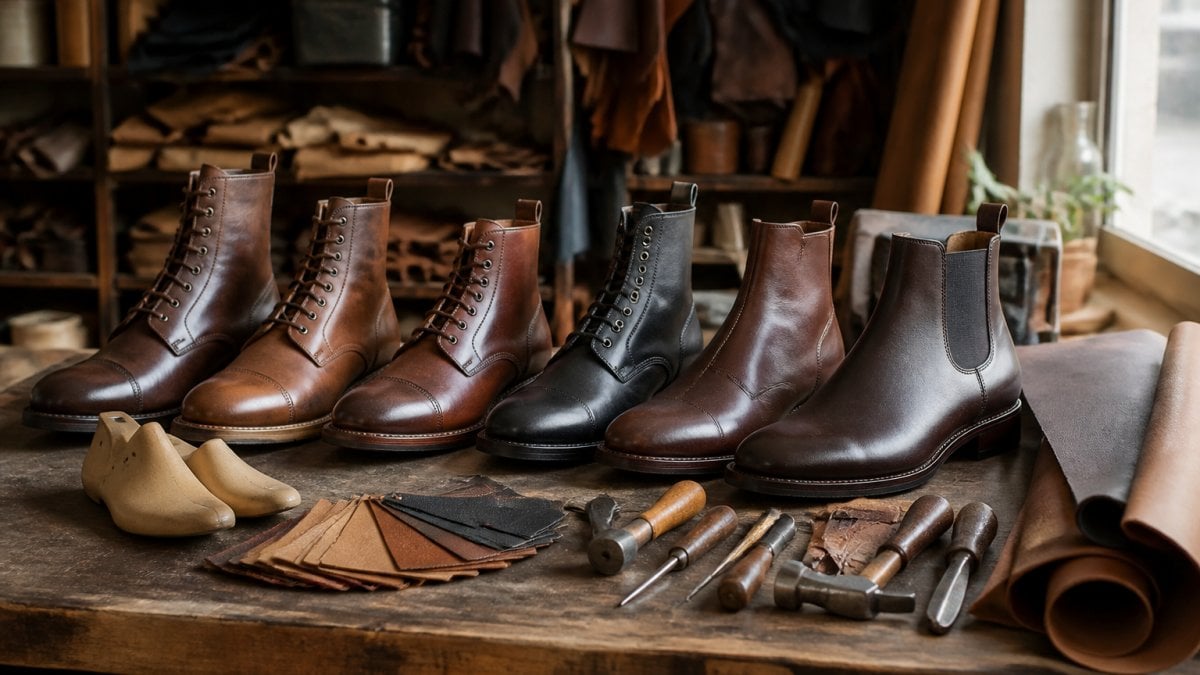
Discover the best premium made to order boots for 2026, handcrafted in Spain with Italian leather and Goodyear welt construction. Prices start at $399.
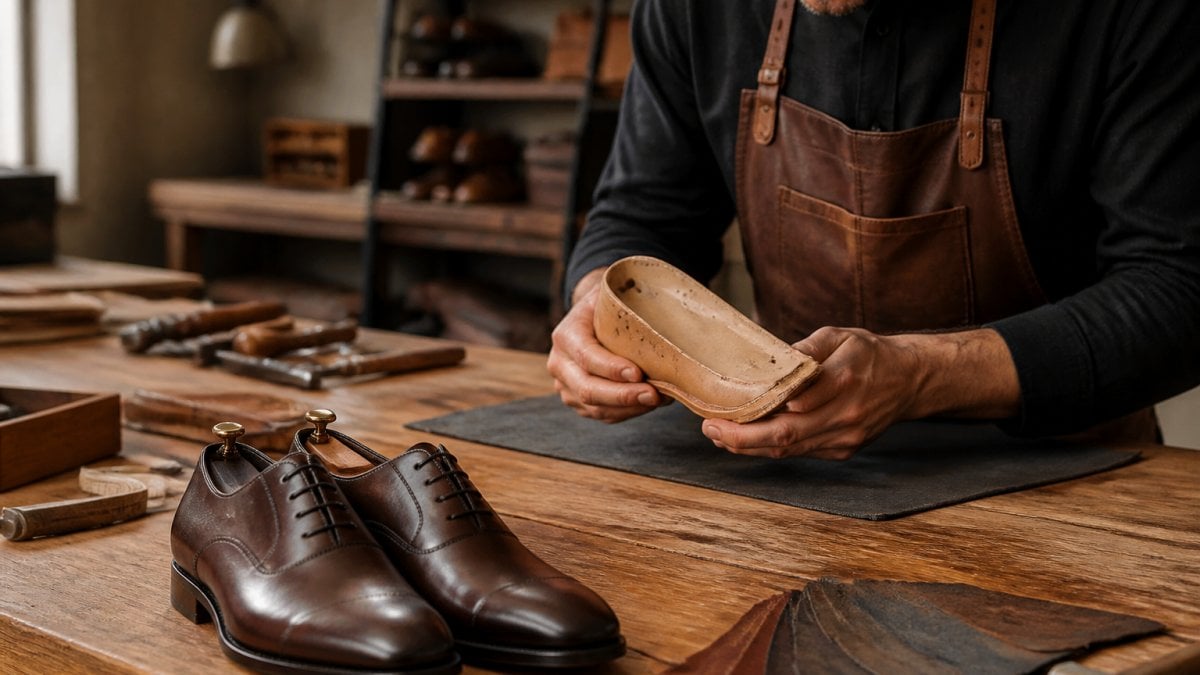
Are custom shoes worth the price? We break down costs, fit, durability, and cost per wear so you can decide before you invest.